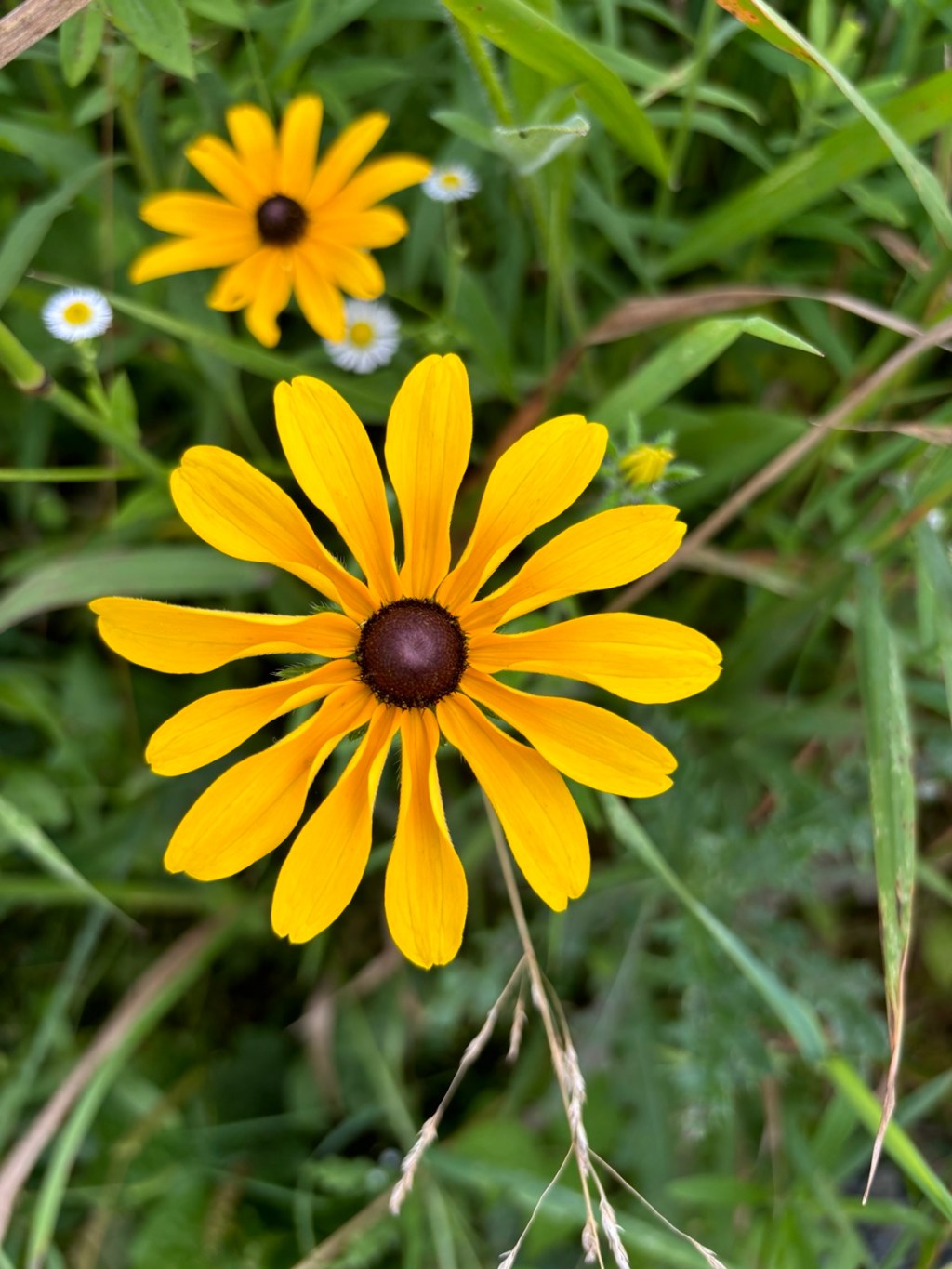
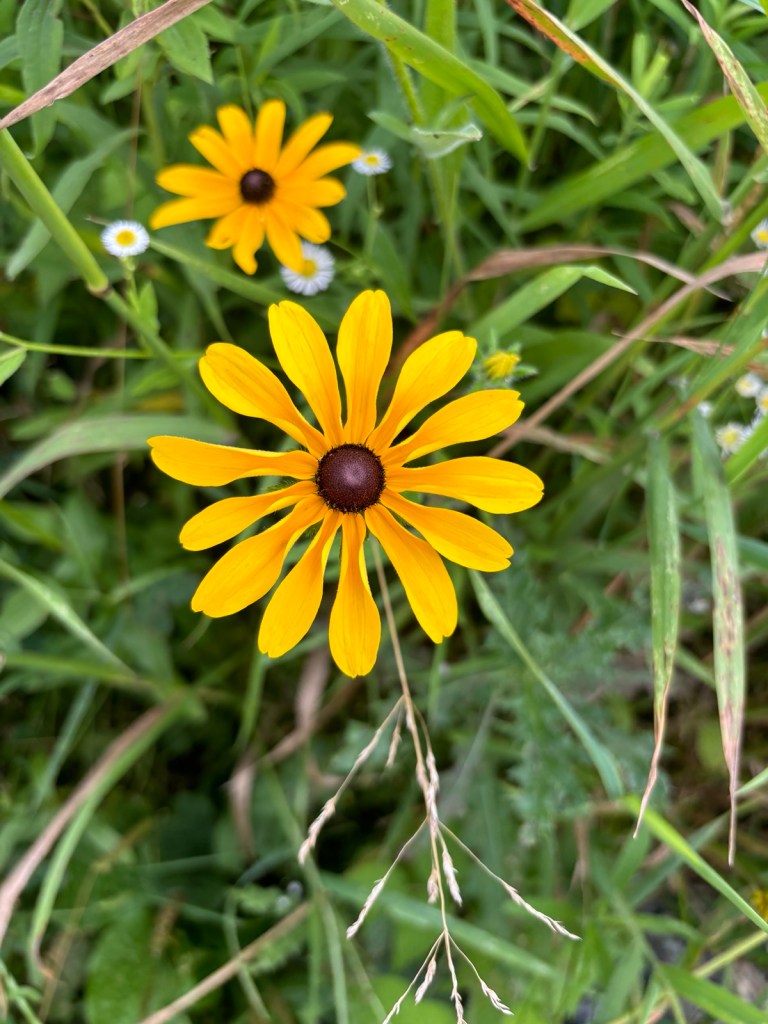
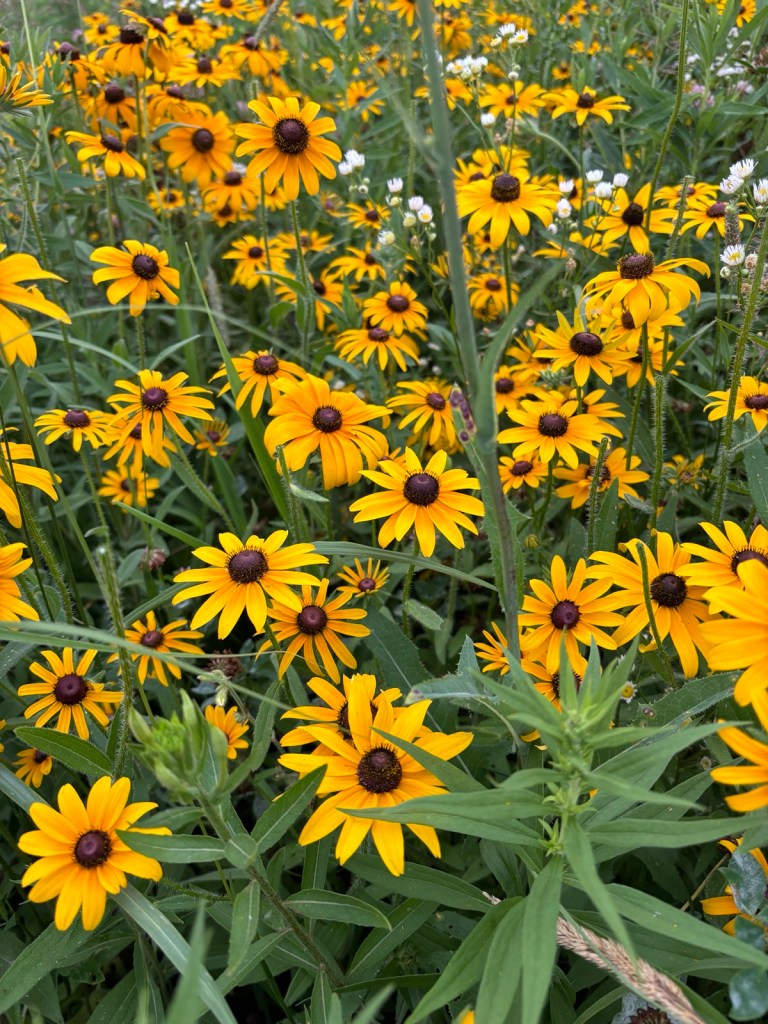
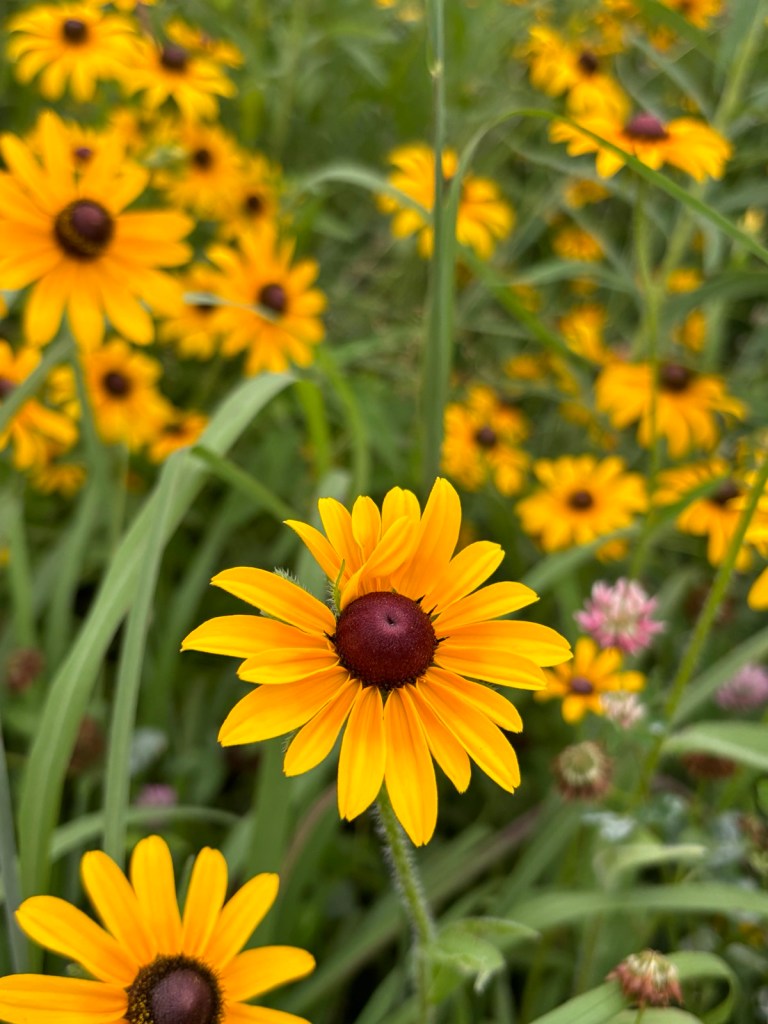
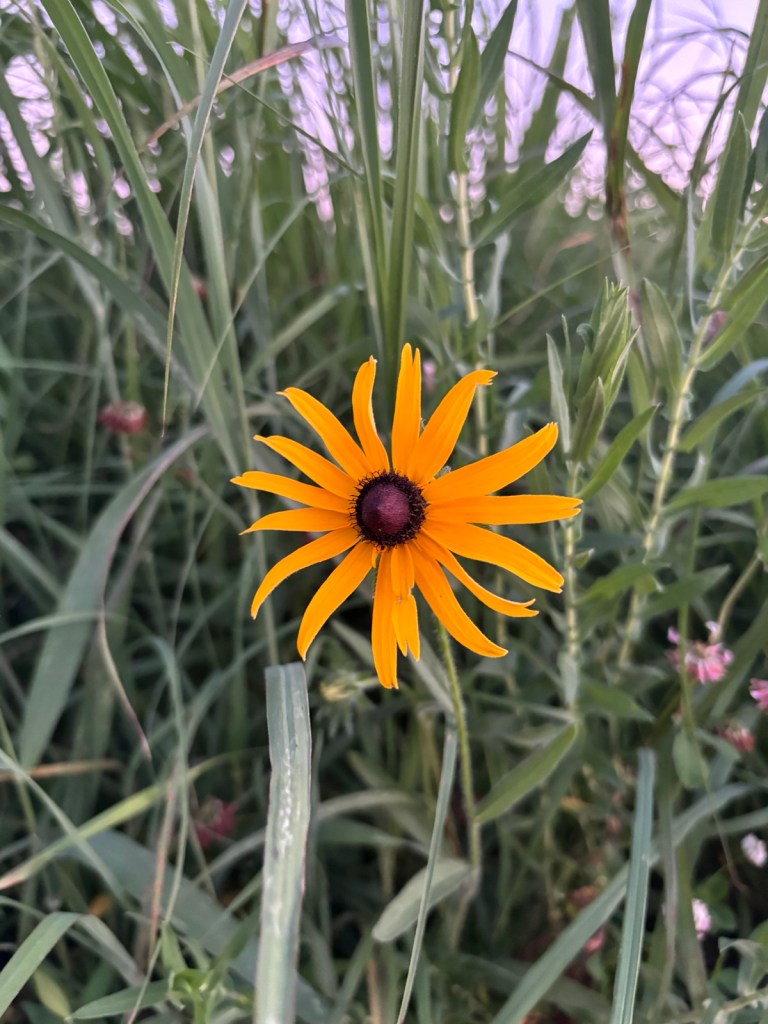
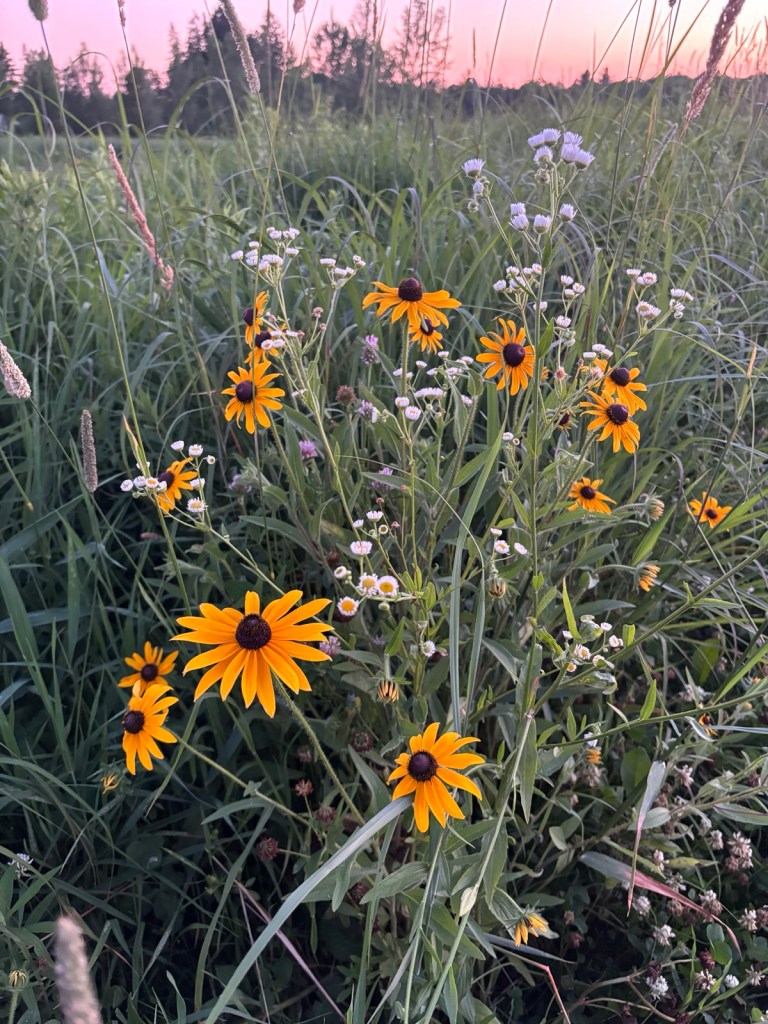
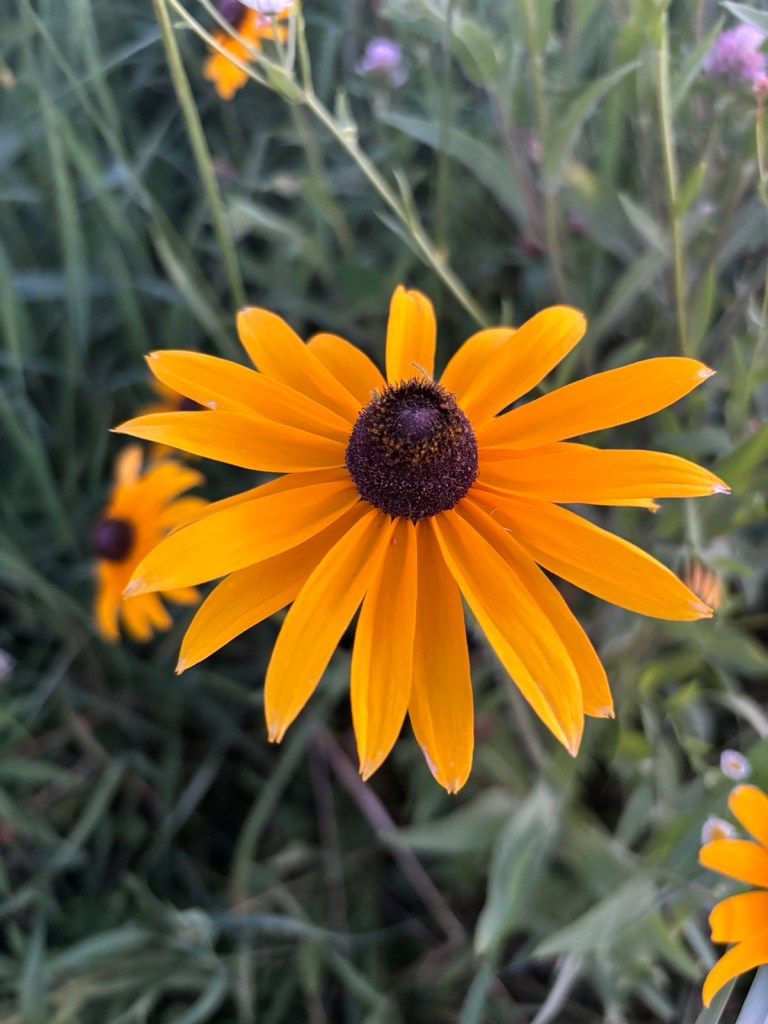
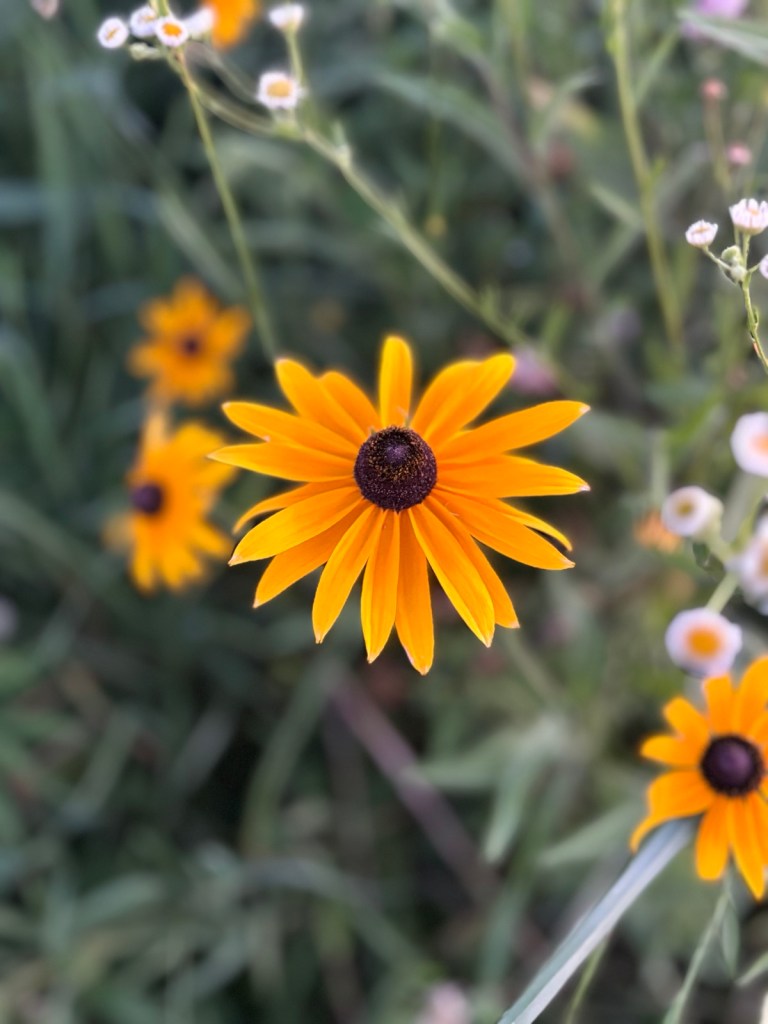
I’ve been telling myself and all my fiber friends for several years now that I don’t want to get into natural dyeing. I don’t need another project. It’s one more process to learn, and I would like to get good, really good, at the things I am already doing- spinning, weaving, wool processing, etc. But sometime in March 2026, I found myself looking at dye plant seeds from Grand Prismatic Seed. Somehow, they arrived at my house several weeks later. Quick plans were made and now here I am, harvesting dye flowers. I started in July harvesting the Black-Eyed Susans. I didn’t plant those myself, they grow rather heavily on the farm in the wind breaks and pollinator spaces. Before now, I haven’t spent much time inspecting individual Black-Eyed Susans by the hundreds, but I would recommend the endeavor. They are all so different! And not just their size; their shape, amount to petals and color all vary so much, it’s almost like looking at different personalities. I got more out of the experience than just future dye as I spent a couple weeks up close and personal with the plants, harvesting almost nightly, and appreciating their simple, everyday beauty.
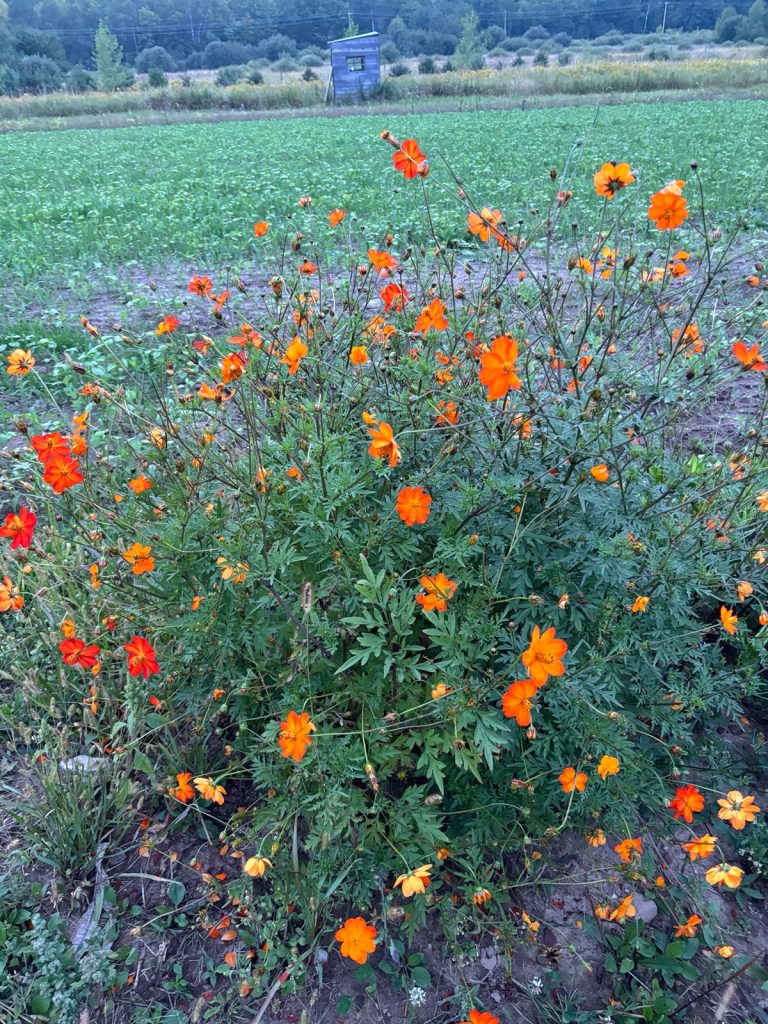
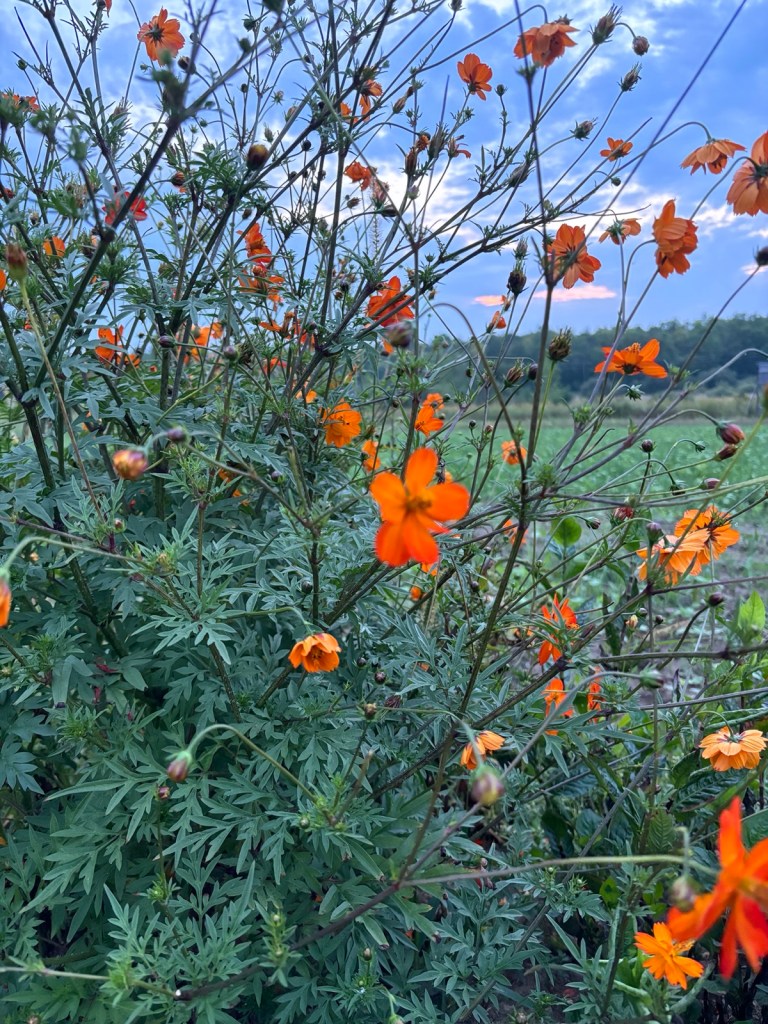
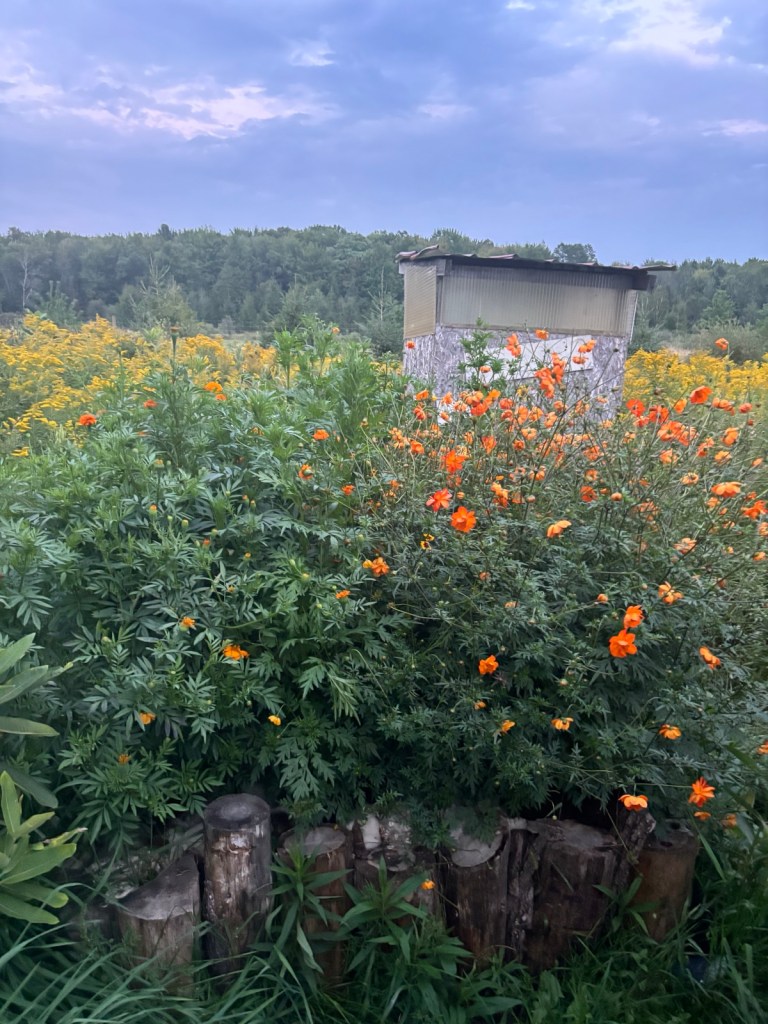
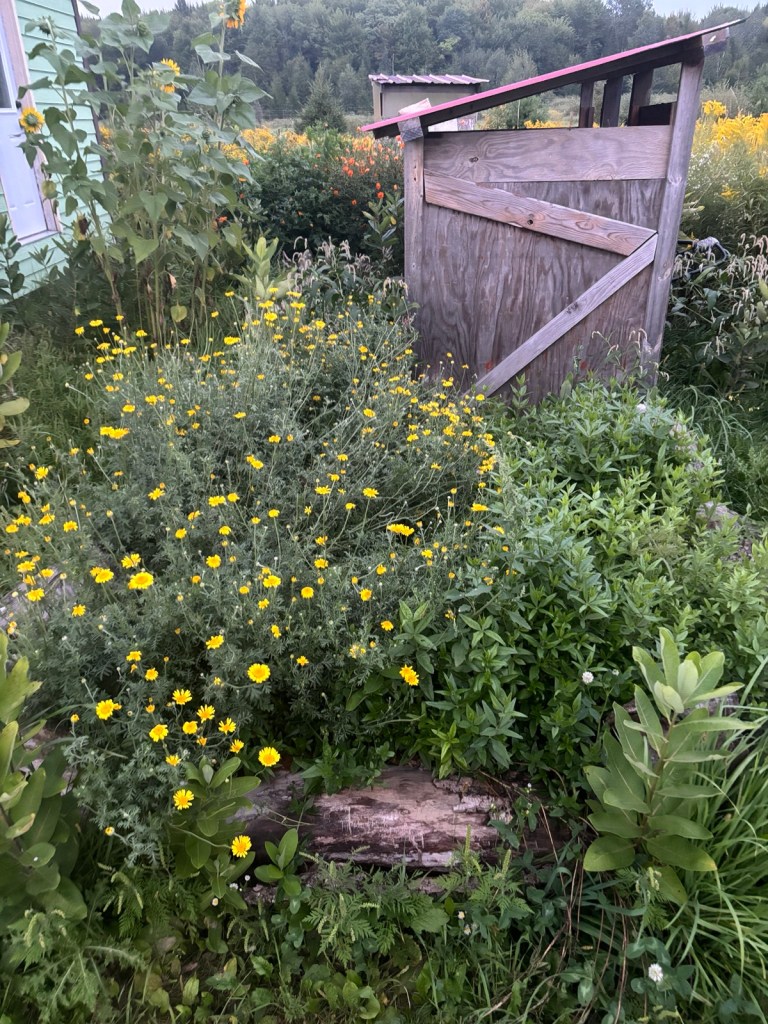
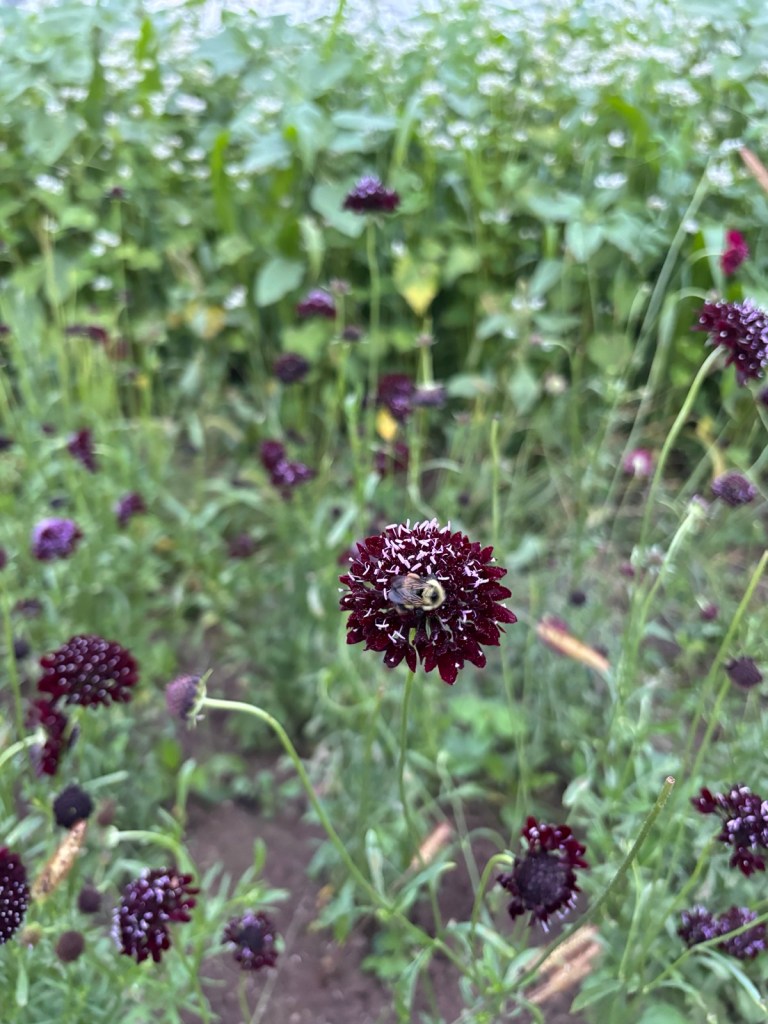
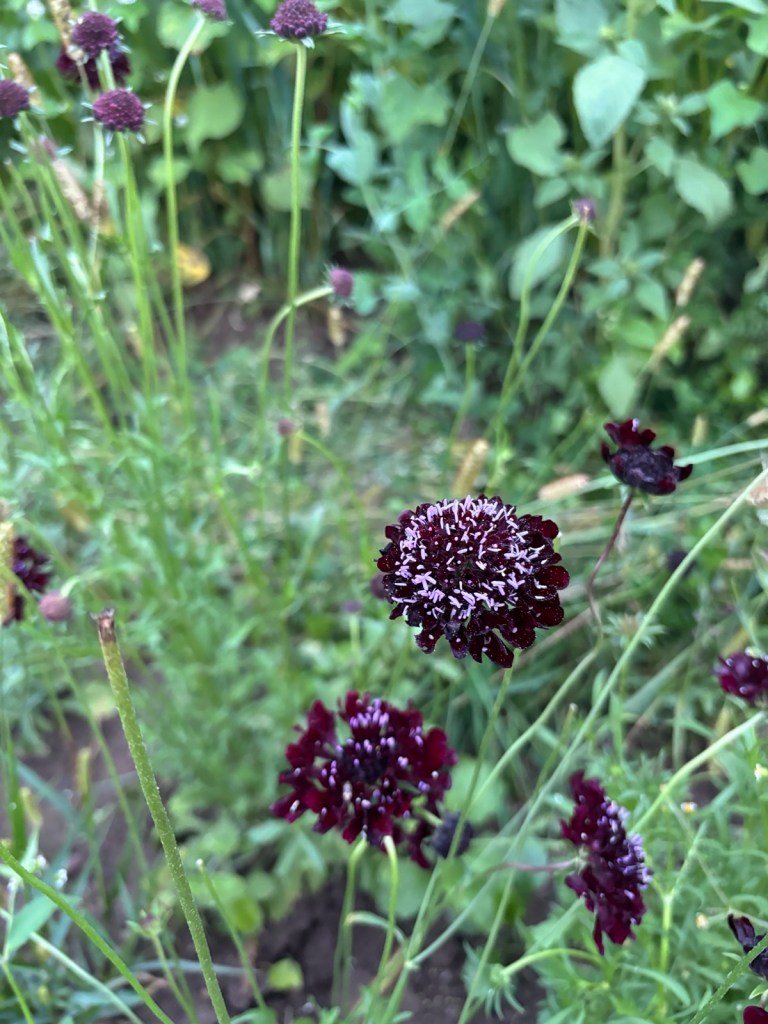
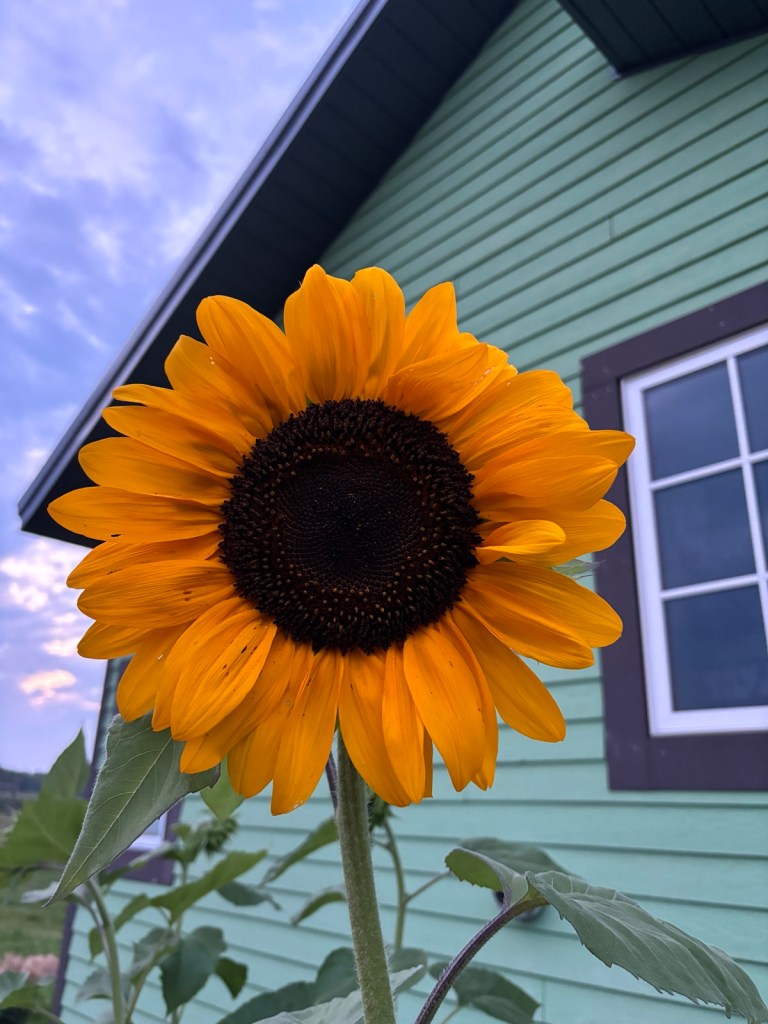
From Grand Prismatic, I bought Dyer’s Chamomile, Tango Cosmos, Madder, Hawaii Marigold, Black Knight Scabiosa, and Hopi Black Sunflower. I wanted them physically close so I wouldn’t forget about them, in addition to just wanting to surround myself and my house with more flowers. I made two raised beds outside my house and planted the Dyers Chamomile and Madder in one and the Tango Cosmos and Hawaii Marigold in the other.
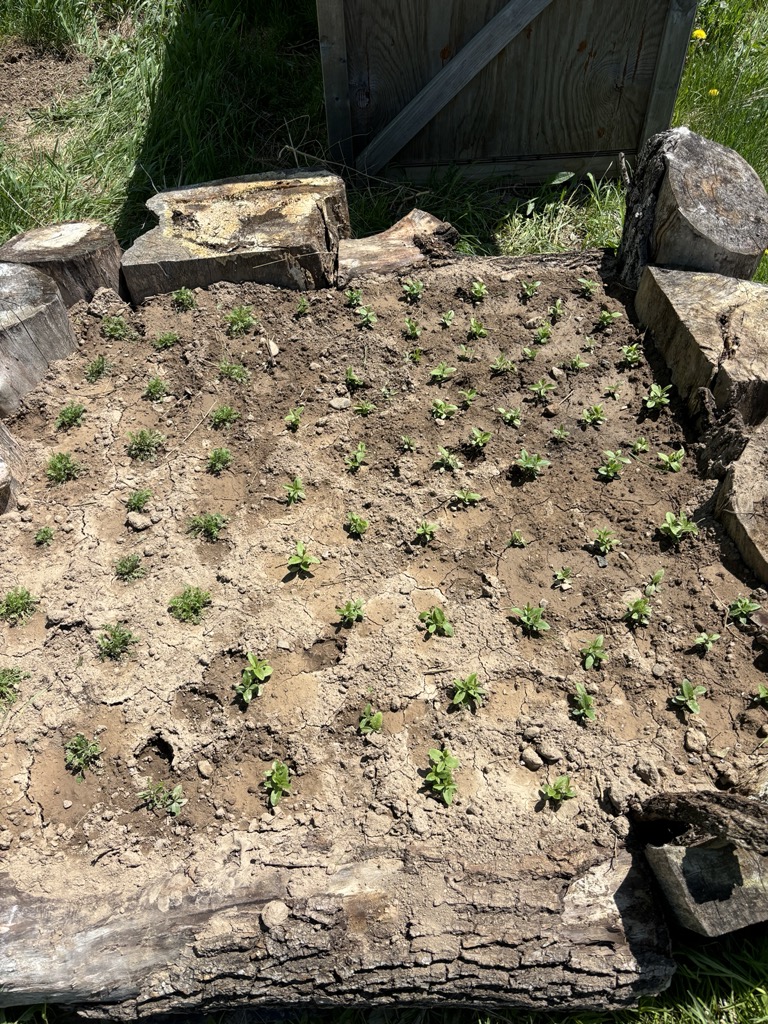
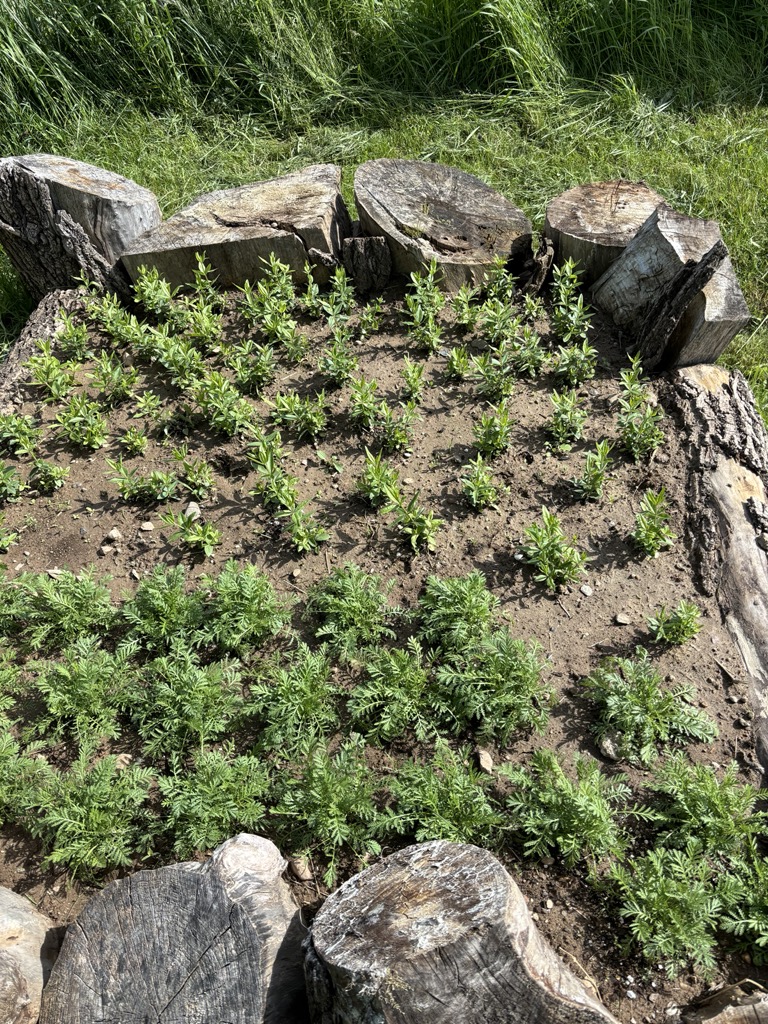
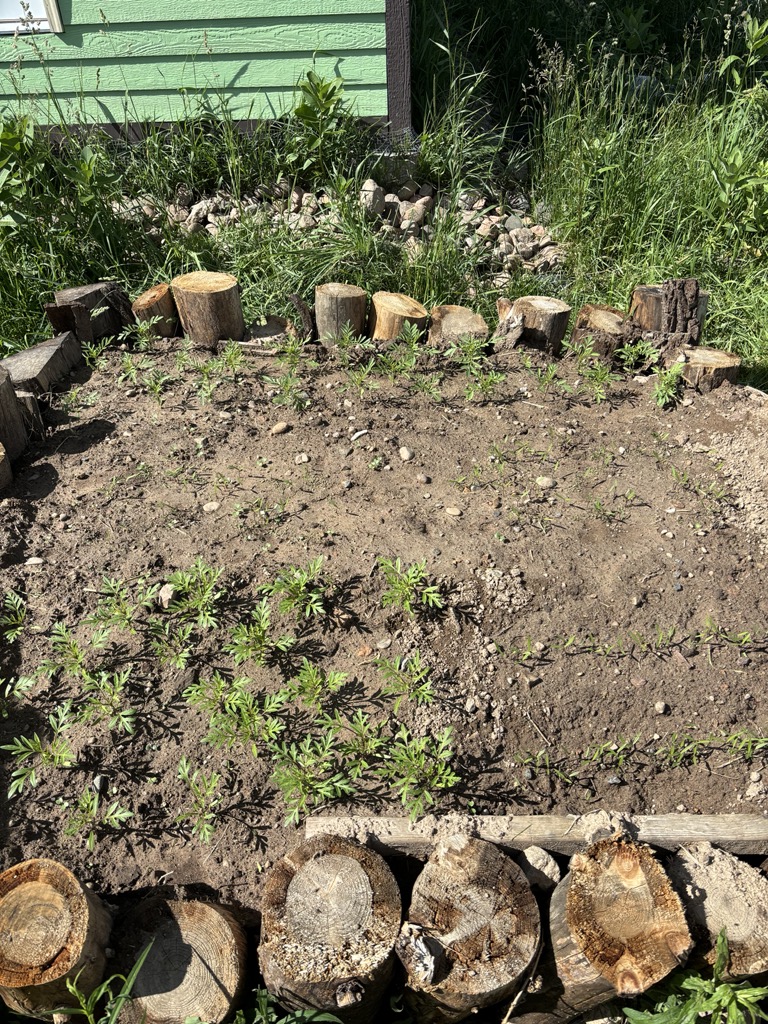
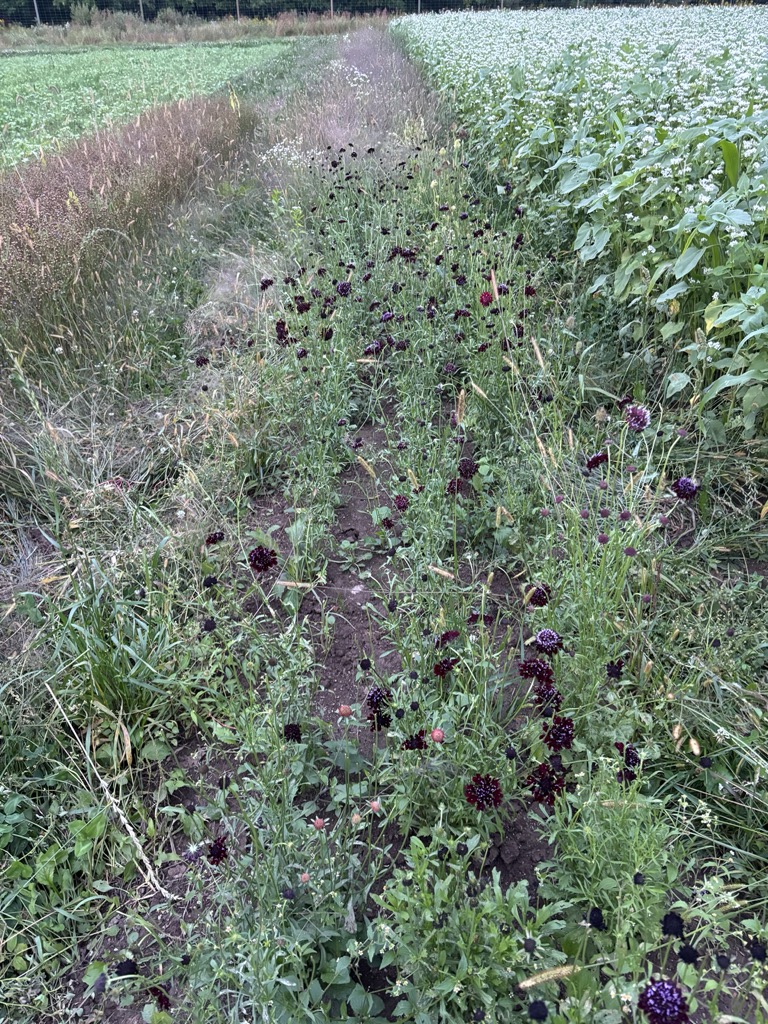
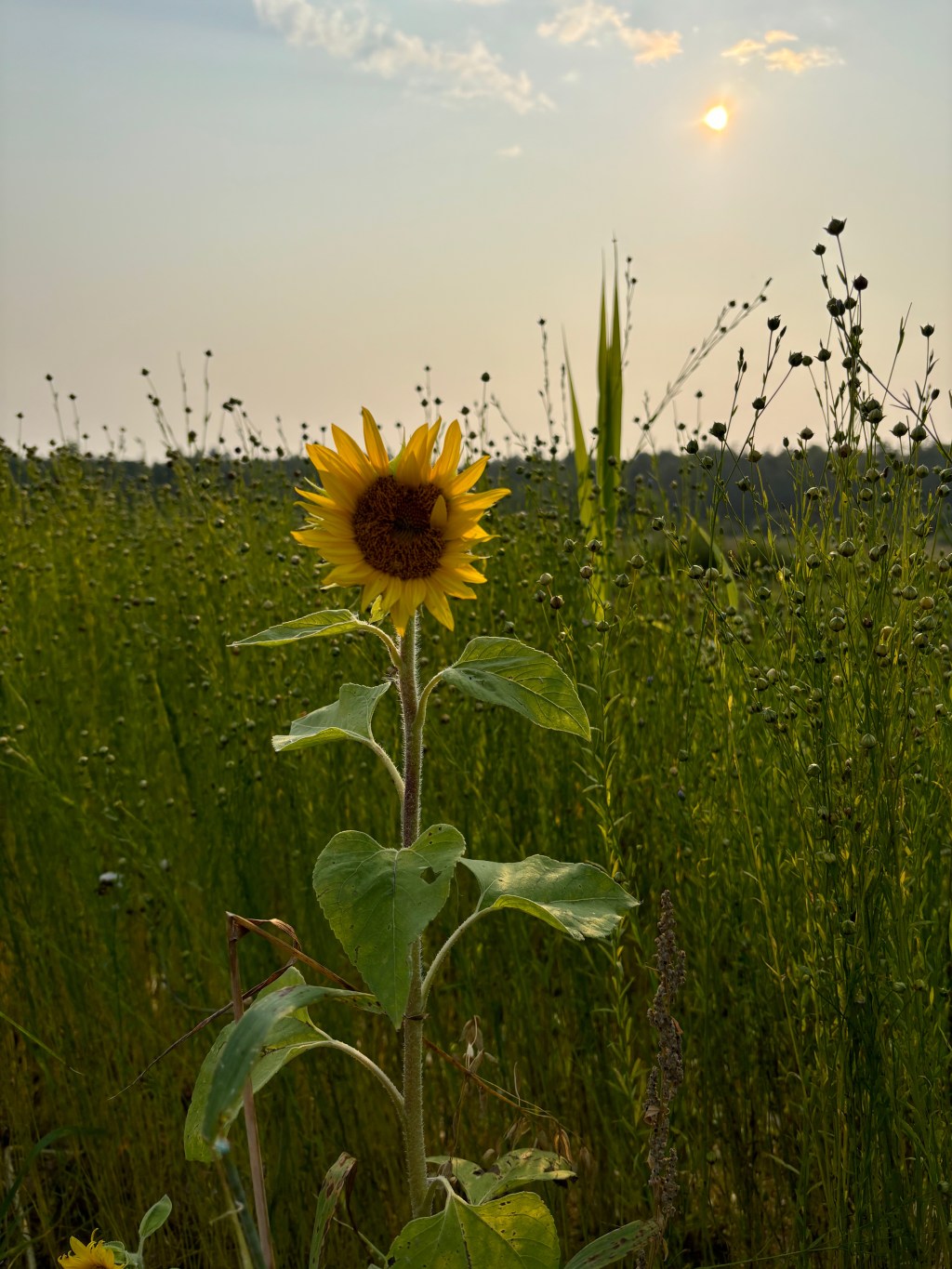
The beds are overcrowded without a doubt. I’m worried the Madder will be awful to dig up in three years when it’s ready. The marigold flowers are a bit oddly shaped and smaller than I was expecting and I wonder if the problem is the overcrowding or the lack of rain this year. Of course I ran out of room in the raised beds, so I planted some of the cosmos, marigold and all the scabiosa in what was leftover in my flax beds. In a flash of brilliance, I thought I would collect seeds from these isolated plants; a new project and my own seed source! Unfortunately, this year was an El Niño and in my neck of the woods, that means drought and high temps. Flax doesn’t need much in the way of irrigation and I planted it in our fallow field with no easy access to water. It was great for the flax but bad for the flowers. The plants are stressed, struggling and not ideal for saving seed.
This natural dye plant project has been a new way to think about what I want to do with all this fiber I’ve been growing or processing. Its giving me a chance to think about what this wool or flax I’ve spent to much time caring for, nurturing and prepping could turn into. These raw fibers will one day become a beautiful garment. But I have learned some valuable lesson from this project that I hope will make my second year run a bit smoother (yes there will be a second year…):
- Plant my flowers with the proper spacing needs and with access to irrigation
- Run this project as a legitimate project- don’t treat it like a side show or it just makes it harder in the long run. That means rent space from the farm, paying for labor, etc, making sure I have a proper space set up for drying the flowers down.
- Set up a consistent harvest schedule
- Plant a critical mass of flowers- if you are going to do something make sure there is enough to actually do something with it.
Here is a list of some important questions you want to ask yourself before you start a project like this is:
Where are you planting your flowers? And is there enough space?
Where are you drying your flowers? Is your space large enough?
How and where are you planning to store them once they are dry?
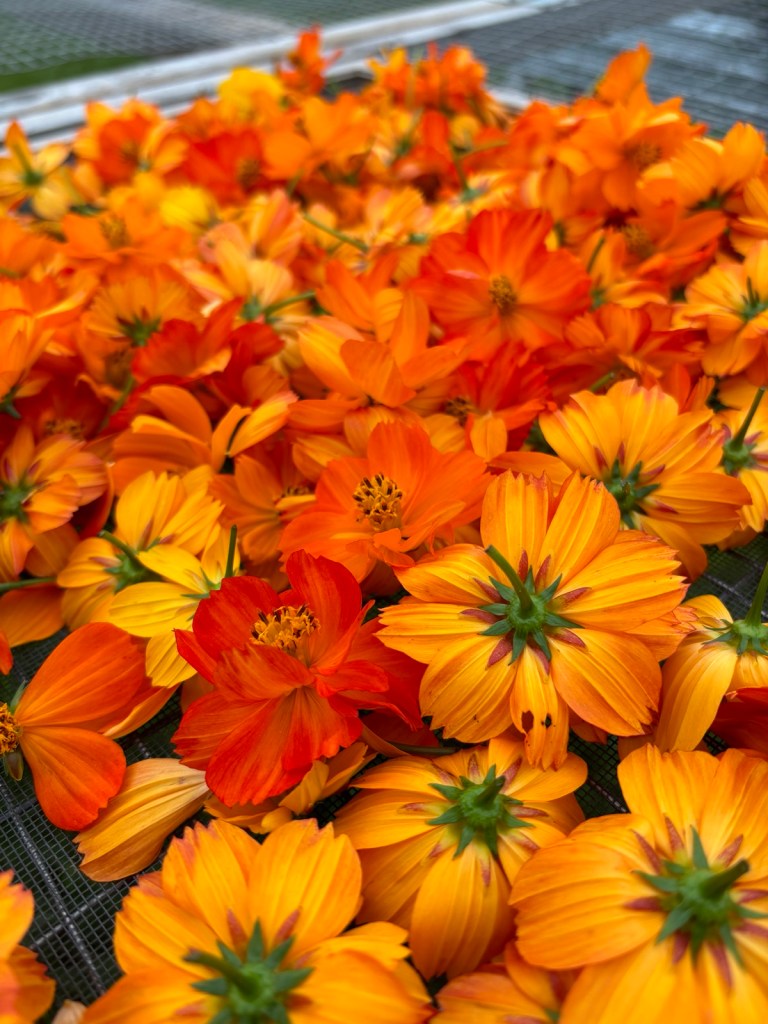
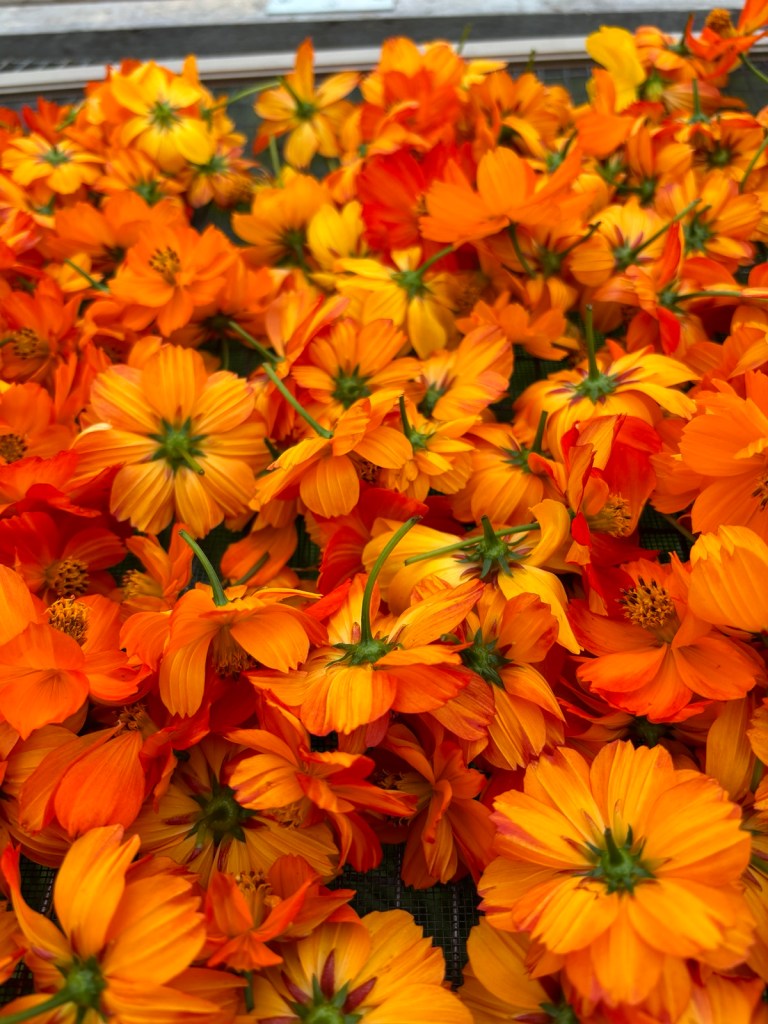
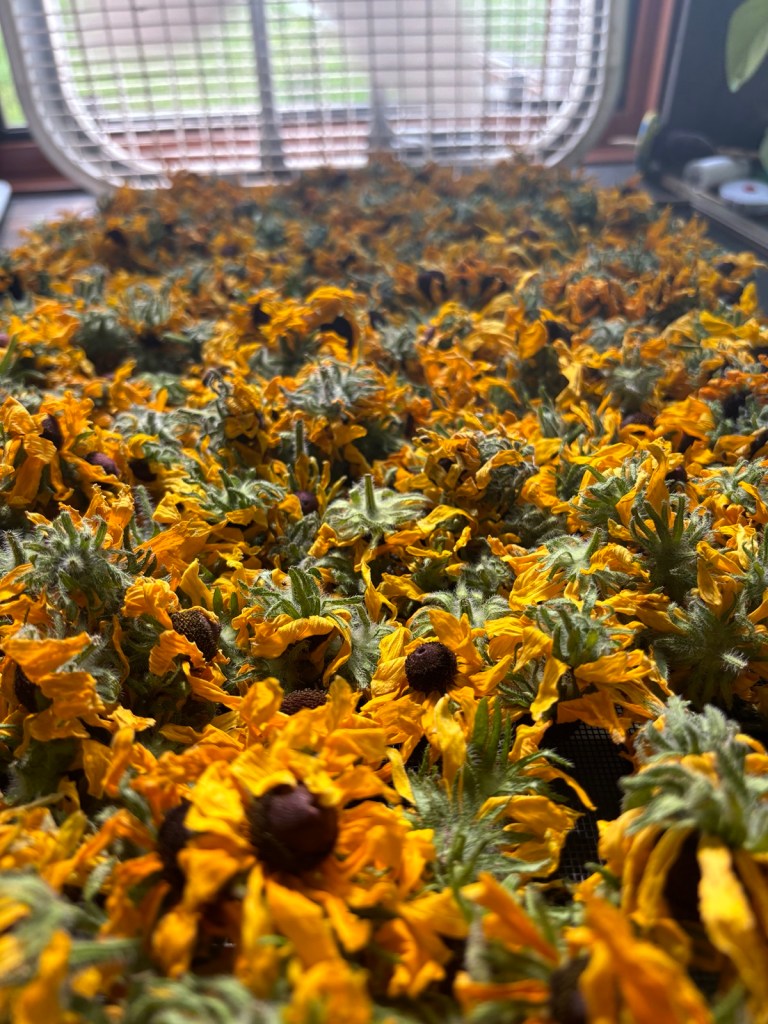
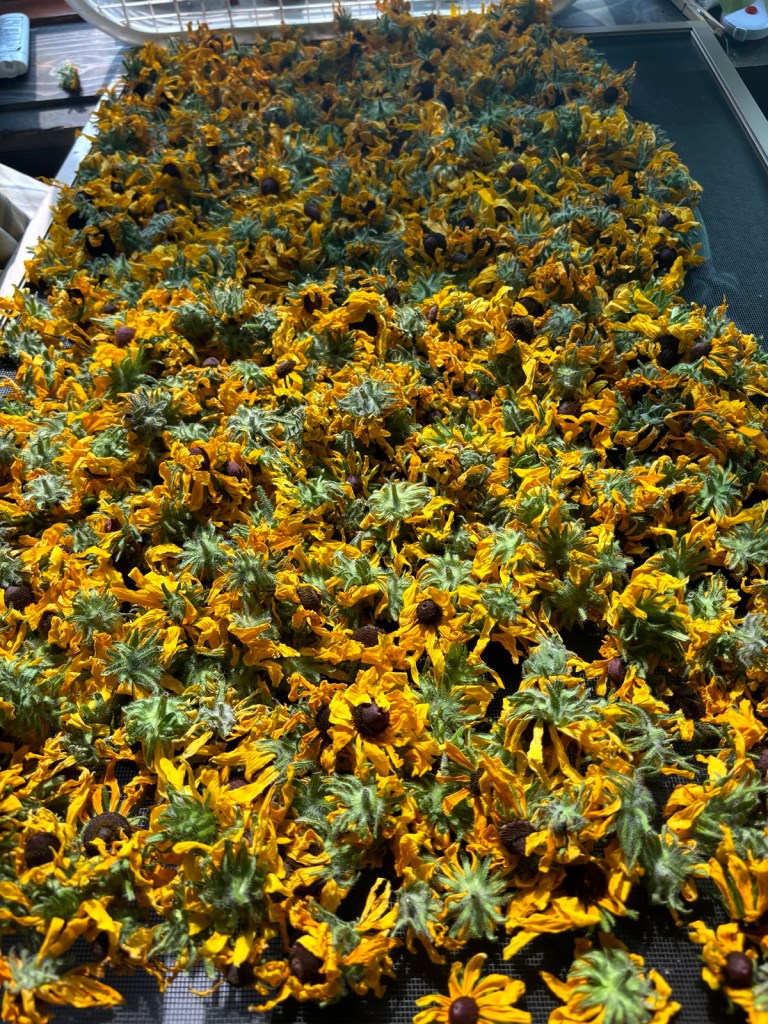
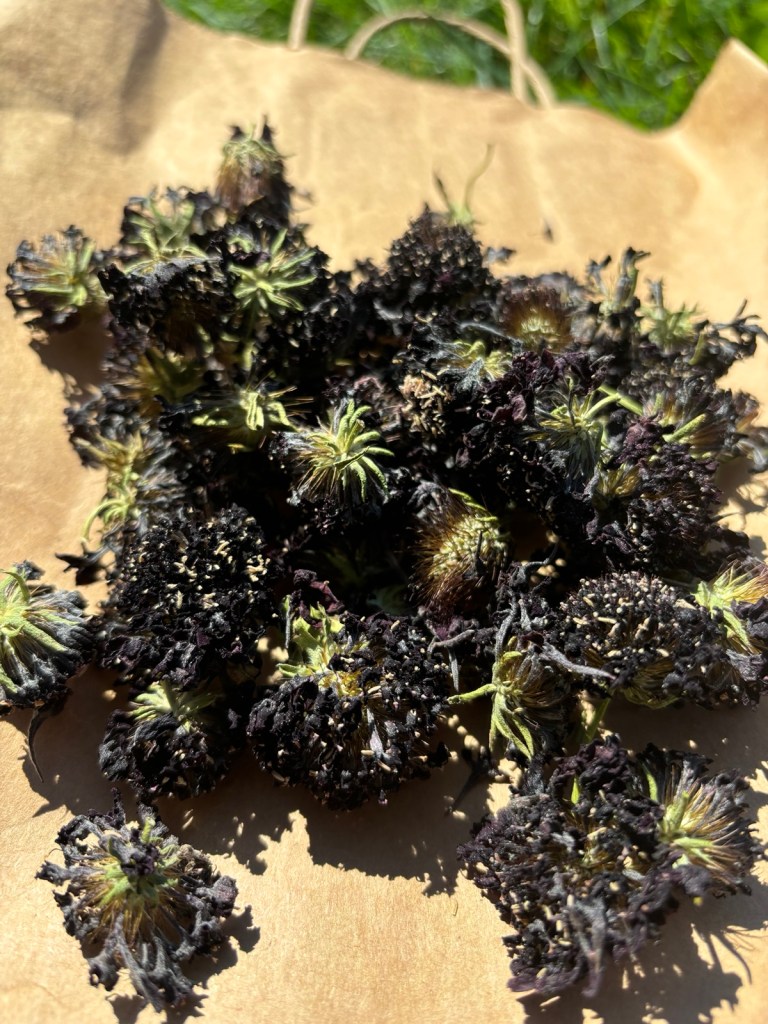
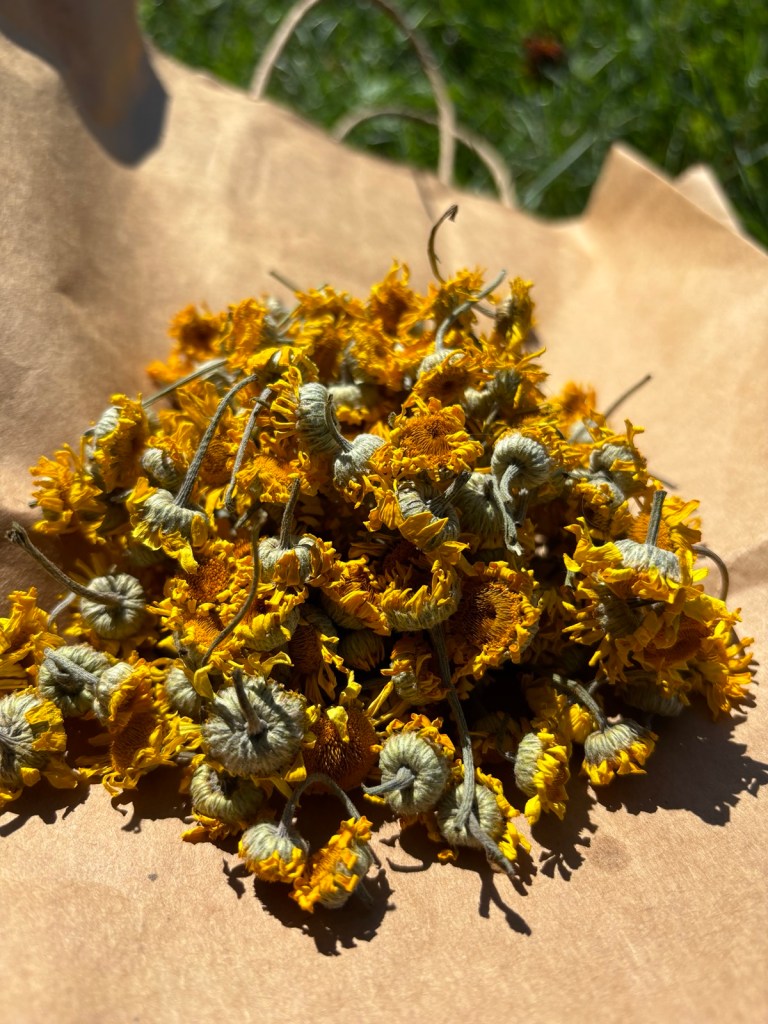
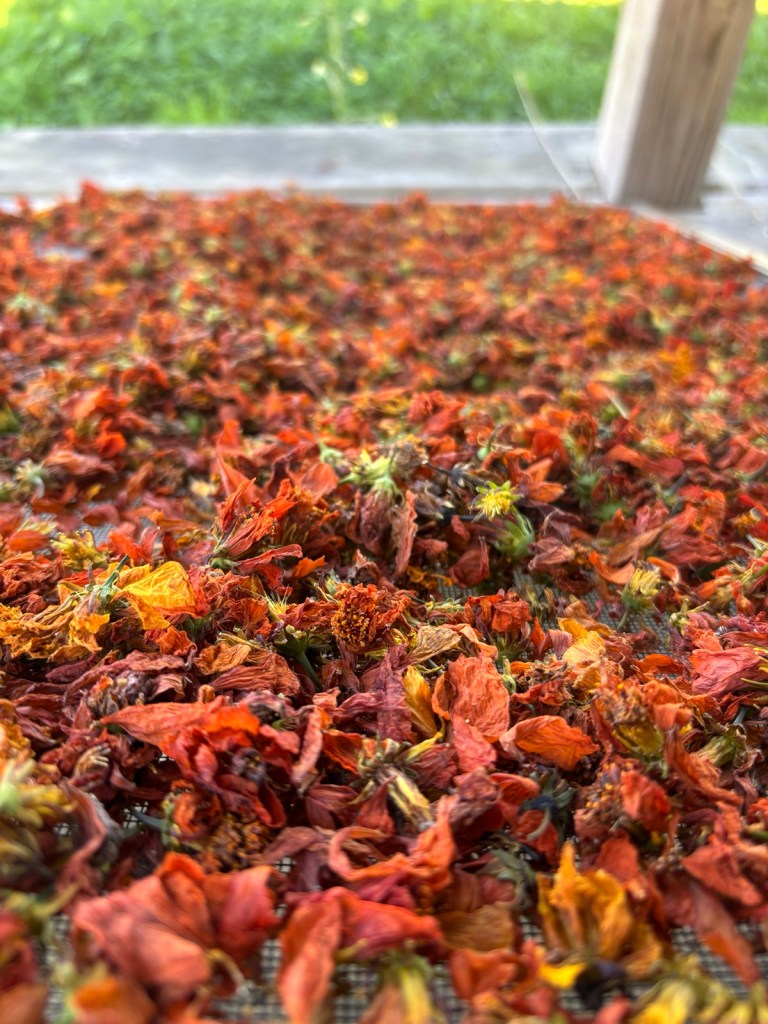
Going out to harvest the flowers has been both fun and time consuming, and whenever something takes your time, it’s worth taking a minute to evaluate whether it’s time well spent. In my case I’ll need to wait until I get to the final dyeing phase to truly make that decision.
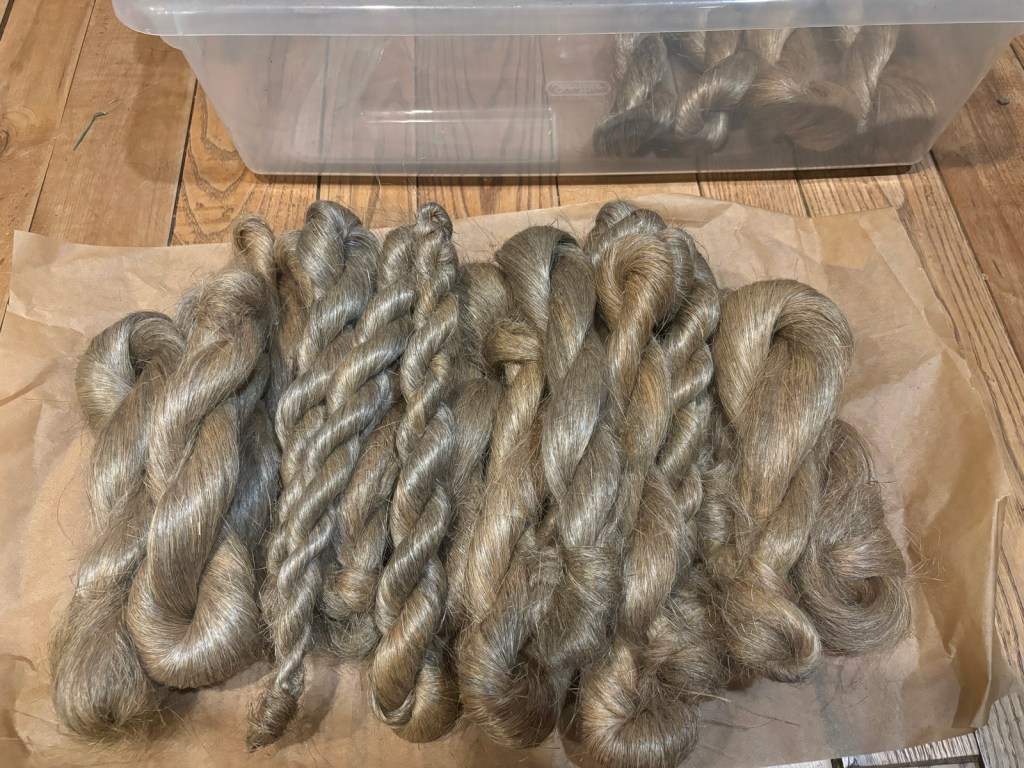
But at the end of the day, flowers add a lot of simple joy and beauty to my life, and so whether or not I find this project to be “worth the time” I could never complain about the addition of more flowers in my life and the time I’ve spent appreciating flowers. And at some point in the future, maybe when it’s cold and blustery, I will release the colors of Summer into a fiber I grew or prepped, also in Summer, and begin its transformation into something beautiful or snugly or comforting. And isn’t that kind of magical?




Leave a comment