
Intro
This is just a quick little ditty about trying something new. It’s good to stretch yourself and try new things every now and again. It’s usually a humbling experience… which is good for the ego.
Felting wool (intentionally…) is one of those new things I decided to try recently. I suppose I should be more specific and say I’ve never tried wet-felting before. I have needle felted several projects as my Christmas Crafting article dug into. And I liked the needle version of felting. I’m currently working on a project that required a large expanse of at least quarter inch thick felted wool. I’m not going to explain exactly what that project is just yet, but I do want to talk about my first try at wet-felting.
The Felting
Starting this project, I decided that I didn’t want to look up any instructions on how to wet-felt correctly… or at least correctly as taught by the internet. I know that wool felts under hot, wet, and soapy conditions. Using that knowledge I figured… let’s just go for it!
To start with, I pulled a fleece I’ve had in storage for 2 years now. The sheep’s name was Ruthie. She is a white Border Leicester x Tunis x Icelandic and is a flock mate to Hope, the ewe I’m using to make my Hope blanket out of (yes the blanket is named after a sheep). Ruthie is the very first fleece I tried to wash. I tried to wash her fleece a year before my official fleece washing journey began. And honestly… it didn’t do very well, which is why she’s still sitting on my shelf. I got her clean-ish although she’s still pretty full of hay because I didn’t skirt aggressively enough. I used Dawn Dishsoap to wash her and had a terrible time rinsing all the soap out, and as a result, she’s slightly felted. All that being said, I figured this little felting project made Ruthie’s fleece the one to choose.
For my first attempt, I decided I would put in as little work as possible. I started by pulling hanks of wool apart from the fleece. I did a little picking apart of the fibers and then threw the fiber into the sink. I started filling the sink with hot water once I had the sink filled with wool. I also drizzled in some Dawn Dishsoap as the water filled. As you know, all these are definite no-no’s for washing wool (when the goal is to keep your wool from felting). I used the sprayer hose to spread the soap around more and get it deep into the fibers.

After I had the sink full of a couple inches of water, I started kneading the soapy wool. I rubbed it between my hands and agitated the wool as much as possible. Once I felt the wool starting to become stiffer and more solid, I started rinsing the soap out. Even before finishing the rinse, I found that the felted bat was… lumpy. The tufts I pulled out from the fleece didn’t smooth out in the water, even with all the pulling I did while actively felting the wool.
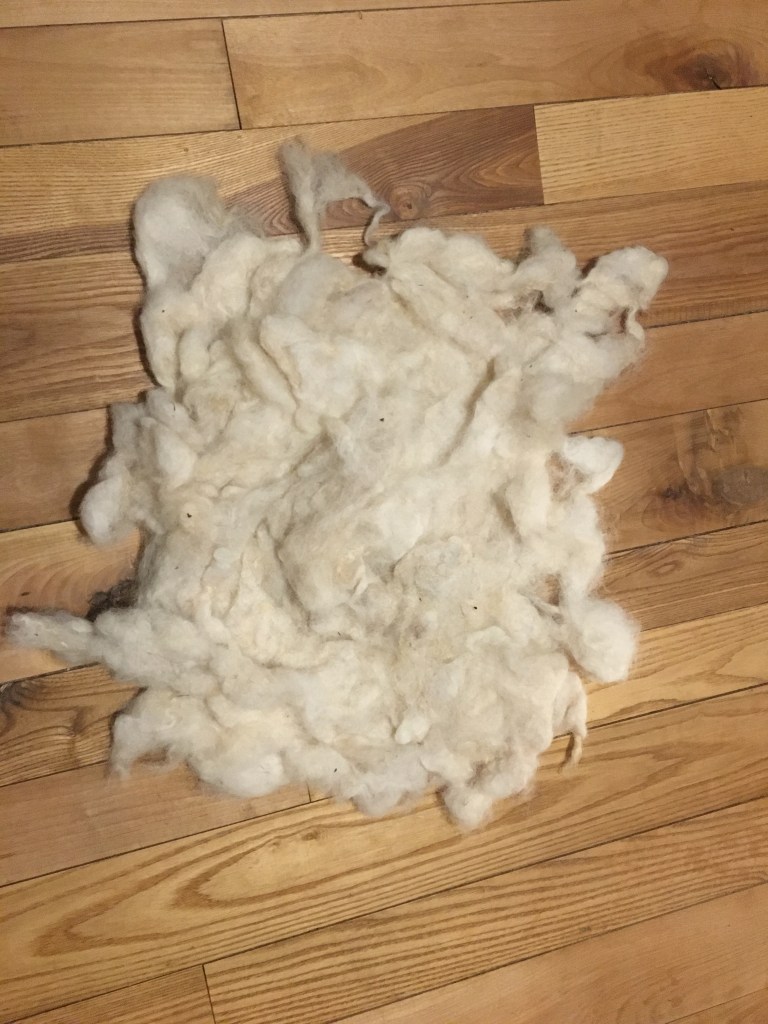
The results of this first attempt weren’t super surprising. I didn’t really open up the hanks I pulled off, and the fleece to begin with is just a touch felted. It wasn’t smooth and even to begin with so it makes sense that it wouldn’t be smooth after coming out of the water.
So how do I turn out a better result?
Since I wanted at much smoother and more even end result, I decided that on Round two I would need to open the material up and align the fibers much more consistently before starting the felting process. I pulled out the drum carder I’ve been borrowing from a friend to get the job done.
I didn’t use a certain weight of fiber for this second attempt; I simply fed in wool until the teeth were filled up nicely. I ended up with a nice fluffy batt.
I took the batt to the sink but instead of throwing it in and starting the wet felting process in the sink, I laid the batt out on the drying rack board. This gave me a flat surface to work on that would drain the excess pools of water away. I wet the batt down using the sprayer hose, drizzled the soap and got to work.
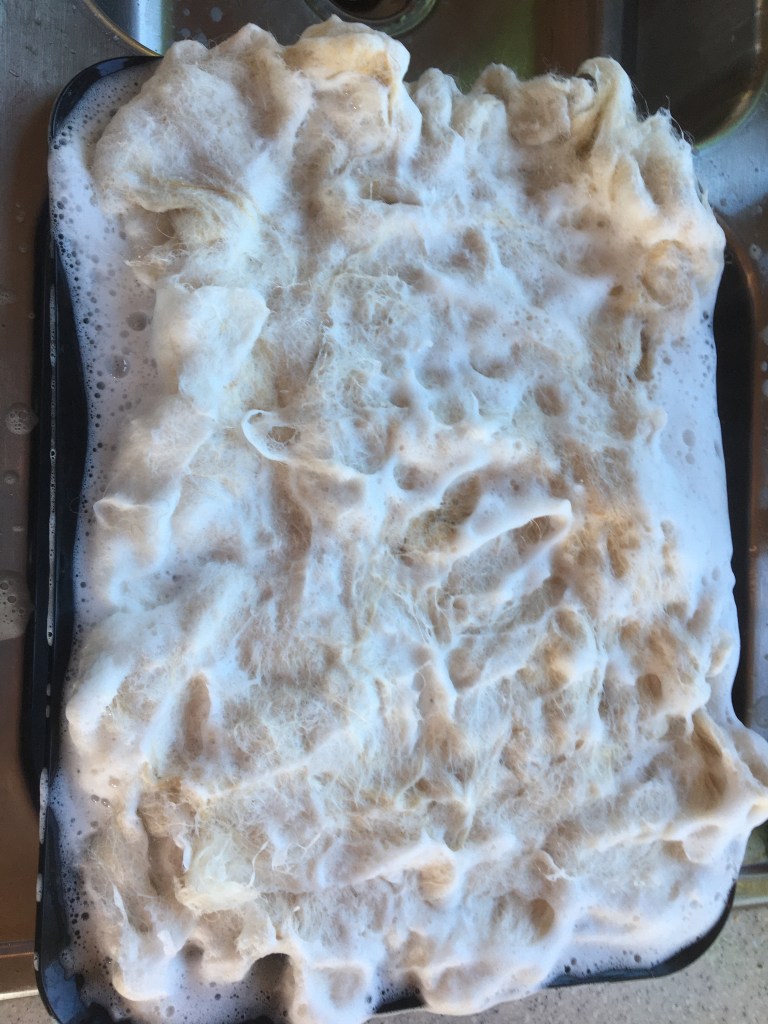
The results were much more what I was looking for.
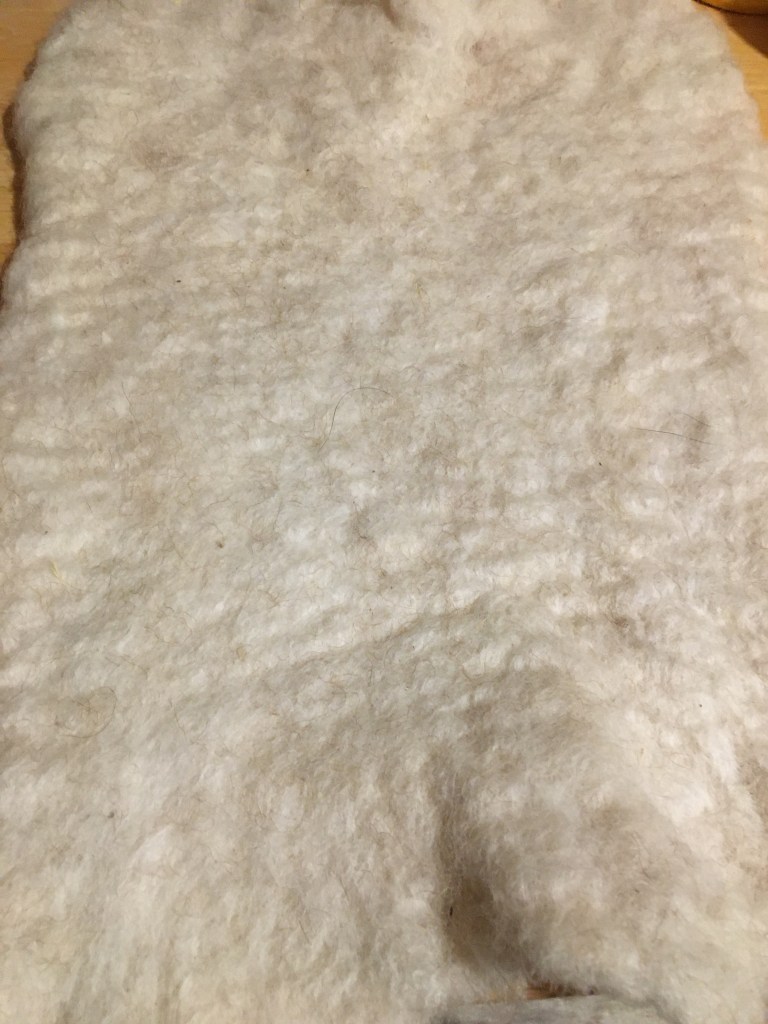
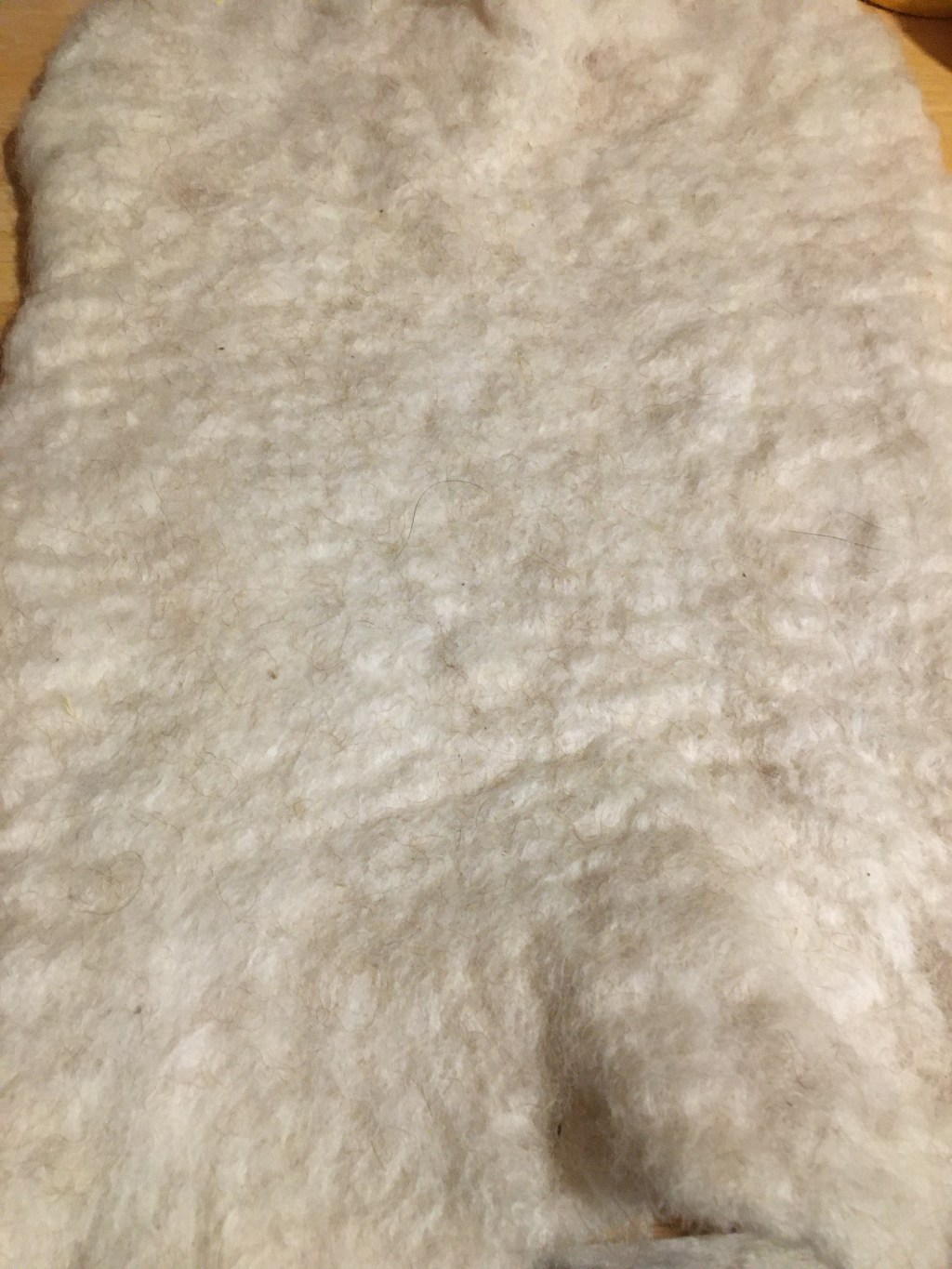
I repeated the whole process again just to make sure I could replicate the results and was pleased to get an equally smooth and satisfying result. Just what I was looking to create for the project I’m working on!
Conclusion
Overall the whole process was easy and satisfying. It was fun to intentionally felt wool that I usually try so hard to not felt. I plan on doing a little research on the “professional process” of wet-felting to see if there are tips or tricks that could make the process faster or more efficient but my gut tells me that there probably isn’t (unless you mechanize). It would be fun to see other peoples way of getting the job done regardless. I think it would be so satisfying to make a piece of felt large enough to line a quilt or even a lap blanket. And don’t worry… the project that the felt was for is coming up. It’s a project that’s been in the works for a couple years now so it’ll be an exciting day when it finally gets done.





Leave a Reply