Intro
Let’s take a deep dive into the Down Family of sheep.
I was inspired to write this and dig into this previously unconsidered (by me) family of sheep after I received two fleeces of Babydoll Southdown fleeces to wash. After doing a preliminary perusing into some information on the breed, some misconceptions I had on them were blown wide open, and I decided that this deserved more in-depth research. What you will find below is part history, part argument to give the Down Family a chance if you are a handspinner and like me hadn’t considered them for spinning. So without further ado, let’s jump in.
Down Fiber vs. the Down Breeds
First, let me explain what I mean when I use the word “down” to describe this sheep family. When I use the word “down” in relation to fiber, my guess is that you picture the super soft undercoat that some animals grow seasonally to help keep their bodies warm during the extreme cold temperatures they experience in the places they live. Qiviut, which is the down coat of a musk ox, is one example of this.
In this connotation of the word “down,” down fibers are the finest of the finest wool fibers. It is grown in a separate layer and is protected by either a layer of hair fibers or a coat of longer, coarser wool. Sometimes the animal has both these layers protecting its precious down coat. At the end of the coldest months of the year, the down layer is shed away.
When we are talking about the Down Family of sheep however, the above definition of the word “down” is not what the word refers to. In the case of the Down Family, the word “down” refers to a specific time and place. This set of sheep breeds originated in the 19th century in the geographical region of southern England called the downs (or downlands). So, when you think about buying a fleece from the Down Family, don’t think of it as a reference to the fiber; think of it as a reference to where and when these breeds originated.
Down Family
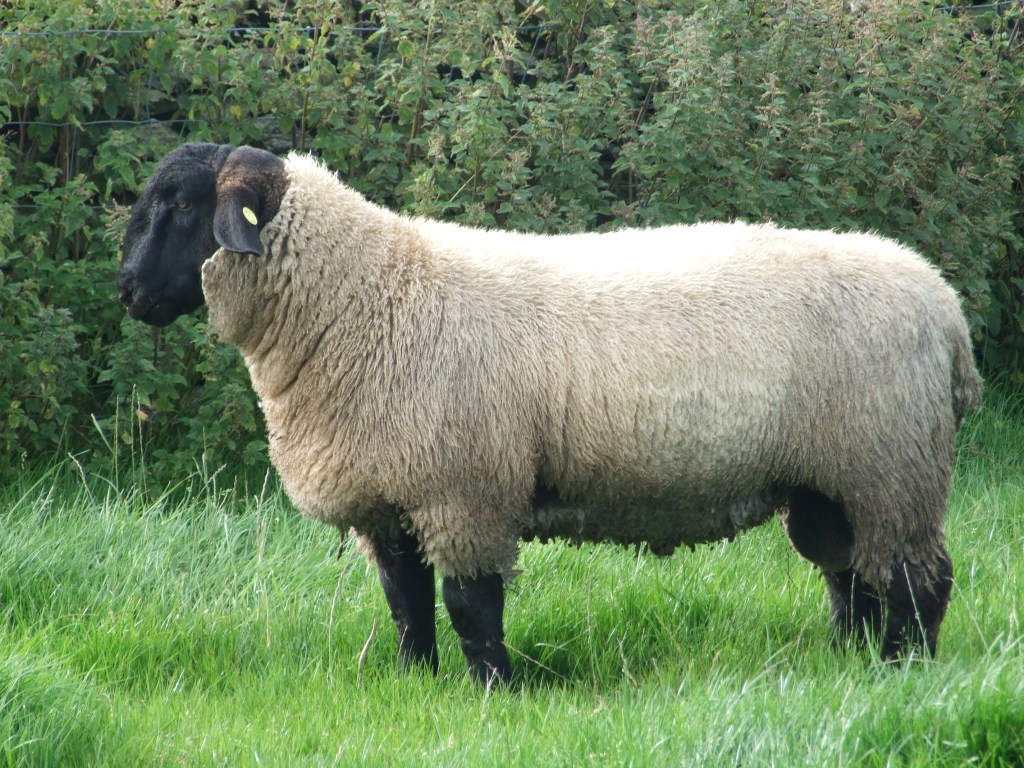
There are only six true breeds of sheep in the Down Family: Dorset Downs, Hampshire, Oxfords, Shropshires, Southdowns, and Suffolks. That being said, there is a considerable amount of down breed descendants and down-like breeds in the world, meaning there is a long list of other sheep who’s wool behaves like that of the true down family. However, they did not originate in the specific geographical region and time period that defines this classification.
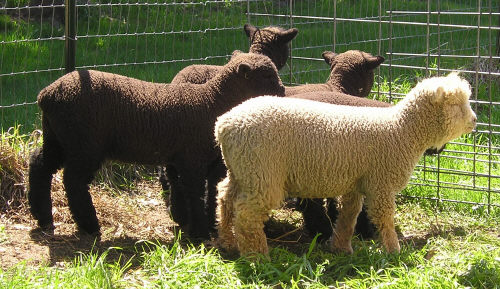
All down family sheep have colored faces (you will find color ranges from tan to black) and colored legs (you will usually find the color on the lower leg). The wool is traditionally white; the presence of colored fibers found in a fleece lowers the value. This is because down breed fleeces end up in commercial textile production and white is valued higher because it is more versatile for dyeing. More recently, there have been some breeders that have hunted down colored sheep with natural colored fleeces to begin cultivating flocks of natural colored down breeds (see the feature picture for an example!) but these flocks are rare.
The staple length of the wool is short, with the average between 2-4 inches. When picking up a lock, it is often difficult to detect any visible crimp structure; the fibers look chaotic, unorganized. But if you pull a single fiber out of the lock to examine it, you will see a spiraling crimp that gives down wool its springiness. I thought that this quote from the Spinner’s Book of Fleece was a perfect way to sum up the crimp structure found in down fleeces:
“Because of their crimp, fibers from other wools fit together like puzzle pieces, whereas the downs’ fiber are puzzle pieces that don’t really quite fit. Their spiral crimp also provides great insulation. All that air between the fibers keeps us warmer in our Southdown sweater than we might be in a sweater knit with yarn spun from one of the longwools.”
-The Spinner’s Book of Fleece, Beth Smith
It’s also the spiral crimp that contributes to the down’s elasticity, resiliency and strength. Down wools don’t felt especially well, leading to a naturally superwash-like wool. You may even be able to machine wash garments made from these fleeces without much worry. It is a chalky wool, meaning that the wool lacks the luster (shine) that you might find in say, a longwool. When spinning these wools, you will want to ensure that you spin your singles finer than you think is necessary for your end goal, because the yarn will expand and fluff up after washing.
Because of all these characteristics, down wool makes some exceptional hard-wearing garments, like socks, sweaters, hats, mittens, and even blankets. And blending them into other wools will add resiliency to the final product.
All that loving on down wool aside, the reason that their wool is found so often in commercial wool blends is because down breeds are primarily raised for meat production. Ewes are quite large and tend to throw twin and triplet lambs. The lambs themselves are fast growing, reaching market weight quickly. Down breeds dominate the United States sheep industry, with the largest populations of registered sheep in the U.S. being Suffolk and Hampshire and Southdowns and Shropshires are among the top 10 breeds numerically. While handspinners do not usually consider these breeds of sheep when choosing fleeces to spin, they are everywhere because these breeds are so prolific.
Southdown Breed
The Southdown breed of sheep is, in my opinion, the coolest in this family because this is the sheep that started it all. The blood of this sheep runs through all other sheep in the Down Family. There are records, reaching all the way back to medieval times, of short-wooled, black-faced and speckled legged sheep being found on the South Downs of England.
Starting sometime in the 1780’s, several breeders in this region began improving the sheep to provide a higher quality meat, and in only 10 years, the Southdown breed had become the most important breed throughout England. Their biggest drawback is that the animal at maturity is relatively small, so it wasn’t long before breeders began to cross native stock found in other areas with the improved Southdown lines. And thus, the Down Family was born with the genes of the Southdown running through them all.
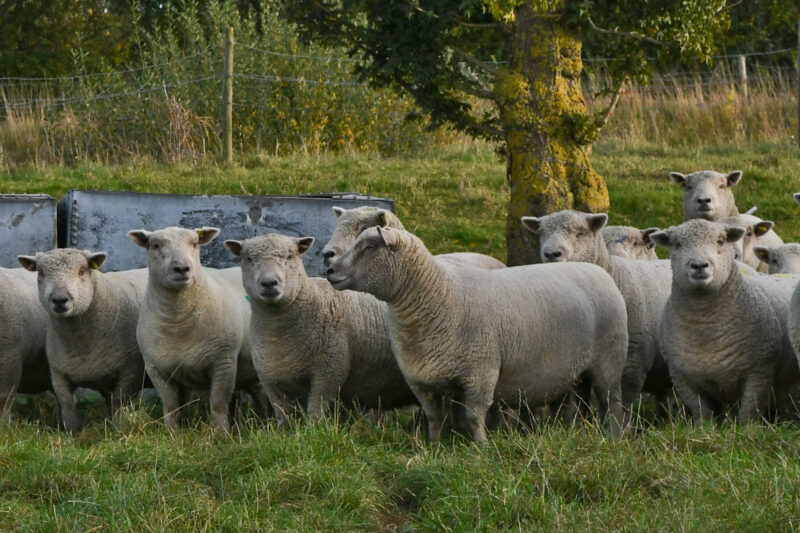
There are several types of Southdown sheep today, with the only distinction between them being size. The first is the medium sized sheep that is used first and foremost for meat production in commercial agriculture. This animal produces a lean but tender carcass with good taste and high feed efficiency. The next smallest one is called the Babydoll Southdown. This is the sheep that produced the latest fleece I washed; the one that inspired this rabbit hole. The size of these sheep is much like the original Southdowns, before the lines were improved in the 1780’s to make the breed more marketable. These sheep today are mostly used as pets and for fleece. The final type of Southdown is called a Miniature or Toy Southdown. Breed in the 1990’s, this variety of Southdown stands under 24 inches at the withers and again, is primarily used as pets and for fleece. The Southdown breed as a whole is docile, easy to handle and affectionate, making them a great choice for farmers looking to raise meat but not wanting to commit to the larger meat breeds.
Southdown Fleece Characteristics
Fleece weight
Because of the different sizes found in the breed there can be lots of variation but you can expect the middle of the road, average weight fleece to be 5-8 pounds, with yields of about 40-55%.
Staple length
You can expect a staple length between 1.5-4 inches with most locks clocking in in the 2–3-inch range.
Fiber Diameter and Color
23-29 microns for white fibers. When it can be found, black Southdown fiber diameter tends to be slightly coarser, coming in at 27-31 microns
Lock Characteristics
Locks are dense and resilient with blocky, rectangular staples that hold together and may be hard to distinguish from one another. These are solidly medium grade fleeces.
Dyeing
Southdown wool dyes nicely and although they are not lustrous, they also won’t be flat.
Fiber Prep
Because these fleeces are often quite short, they should be carded; the short staple length will make other forms of prep like combing and flicking hard. Spin your Southdown to maintain the loft. Keep your drafting light and the twist moderate.
Wool Pool
In discussing the down family, you really also have to discuss how farmers and ranchers handle the fleeces of their sometimes quite large meat production flocks. Although when you think of sheep being raised for commercial meat production, wool is not the thing that comes to mind, sheep still need to be sheared yearly to keep them happy and healthy. The largest sheep and lamb ranchers have the opportunity to sell their wool clips directly to the woolen mills, who buy wool bales by the semi-truck load.
However, what do you do if you are a small or medium sized producer and you don’t have the quantity of fleeces to sell directly to a mill? You sell your wool through a wool pool. Wool pools are similar to co-ops in that a group of many smaller producers combine their wool for better marketing. These can be set up through counties, regions or states and are not breed specific, but you can bet that down breeds make up the bulk of these pools.
After shearing (which happens once per year in the short-fleeced down family), fleeces are bagged and sent to the pool. Wool is then graded by government graders or semi-local agricultural educators, who are judging the fiber based on fiber length, diameter, crimp, cleanliness, color and strength. The fleeces are separated and weighed by grade and contributions from the various farms are recorded, and the total weight of each grade is recorded.
And when all the grading, separating, and recording is finished, the graded wool is baled into packed bales of 50 to 60 fleeces that weight over 400 pounds.

The bales get loaded onto trucks and sold to the mill that bids the highest, after which the shepherds receive their pay. The pool manager pays the farmers and ranchers using the recorded poundage submitted by each farm. In 2012, the average price paid for wool was just $1.53 per pound for raw wool. Wool top (wool that has been washed and combed) fared a little better at just over $4.50 per pound in 2012. As you might have guessed from these low numbers, just getting wool to market, even with the use of a wool pool, is often times a money losing process for the ranchers. That is how we end up with wool being burned, used as mulch in flower and veggie beds or being bagged and put away in storage to be forgotten about. It’s a sad end to a perfectly usable and valuable product.
Conclusion
So, have you been inspired to go out, find yourself a down fleece and give it a try? I hope so. And while they may be hard to find, they also exist in high quantities and should be sought out. And we already wear their wool frequently enough in commercial ready-to-wear products: any garment or skein of yarn labeled simply “wool,” without a specified breed, is likely to contain a down-type breed. So, I hope you seek out a producer with a down family flock, process the wool, blend it into your existing wool varieties or spin it up pure; knit or crochet a garment, and enjoy the surprising results of the process and the outcome. Check out the resources listed below if you want to learn more about downs, Southdowns, or spinning!
Resources
Content
Robson, Deborah and Carol Ekarius. The Fleece and Fiber Sourcebook: More than 200 Fibers from Animal to Spun Yarn. Storey Publishing, 2011. Pages 22-27, 67-71.
Smith, Beth. The Spinner’s Book of Fleece: A Breed-by-Breed Guide to Choosing and Spinning the Perfect Fiber for Every Purpose. Storey Publishing, 2014. Pages 150-152, 172-175.
Pictures
https://en.wikipedia.org/wiki/Suffolk_sheep
https://livestockconservancy.org/southdown-sheep/
https://www.fiberofmaine.com/blogs/news/southdown-babydoll-sheep
https://www.oldeenglishbabydollregistry.com/about-the-breed/



 Foxtail and Flax
Leave a reply to Reviving Fiber Traditions: Flax and Wool Summer Recap – Foxtail and Flax Cancel reply