
Introduction
This week we are going to be digging into some of the differences I found while growing two separate beds of flax this past summer. I referenced the book Linen: From Flax Seed to Woven Cloth by Linda Heinrich when first preparing to plant flax and I’ve pulled out a few quotes that I found particularly insightful.
“If possible, prepare the bed in early fall… Consider covering the prepared soil with black plastic to curtail weed growth during winter months…” (pg. 8)
” The time for planting depends on weather and soil conditions. The soil should be moist but not wet when made into a ball… Flax plants will survive mild frosts but cold soil slows germination.” (pg. 9)
I also referenced several different university websites, including the Iowa State University Extension and Outreach, learning for example that flax can withstand temperatures down to 28 degrees Fahrenheit just after germination but after they hit the 2 leaf stage they can tolerate temperatures down in the low 20’s. This was good news for planting in early April in Wisconsin.
I do recommend doing your own research for your particular neck of the woods if you are planning on growing flax. Reading books, visiting university resources and hopefully even checking out some blogs like this one will give you insight on the plant and how to grow it successfully in your area.
Now with a little information from the experts under our belts let’s jump into how I planted my two beds; and at the end, a comparison and my takeaways.
Background of my Beds
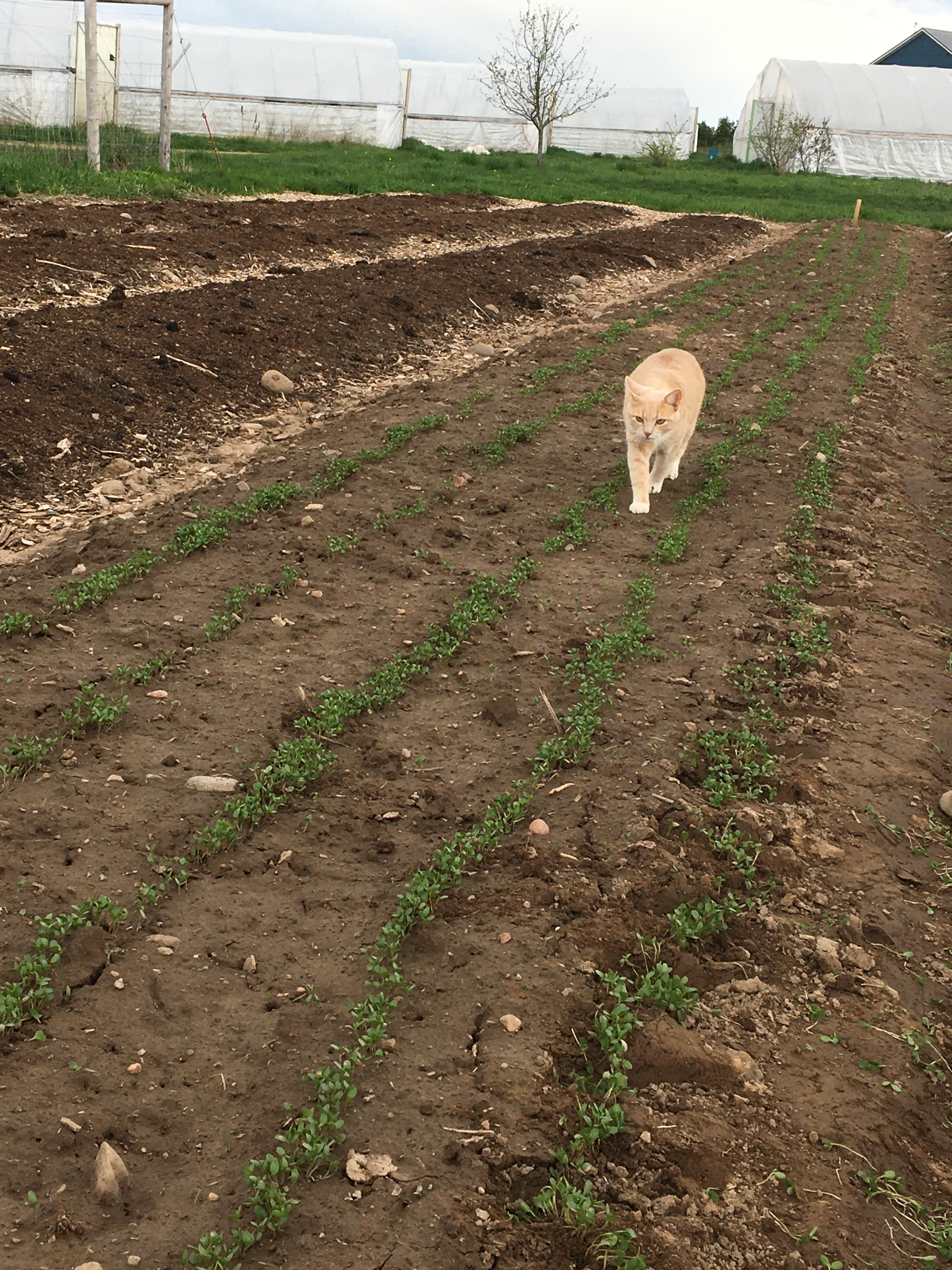
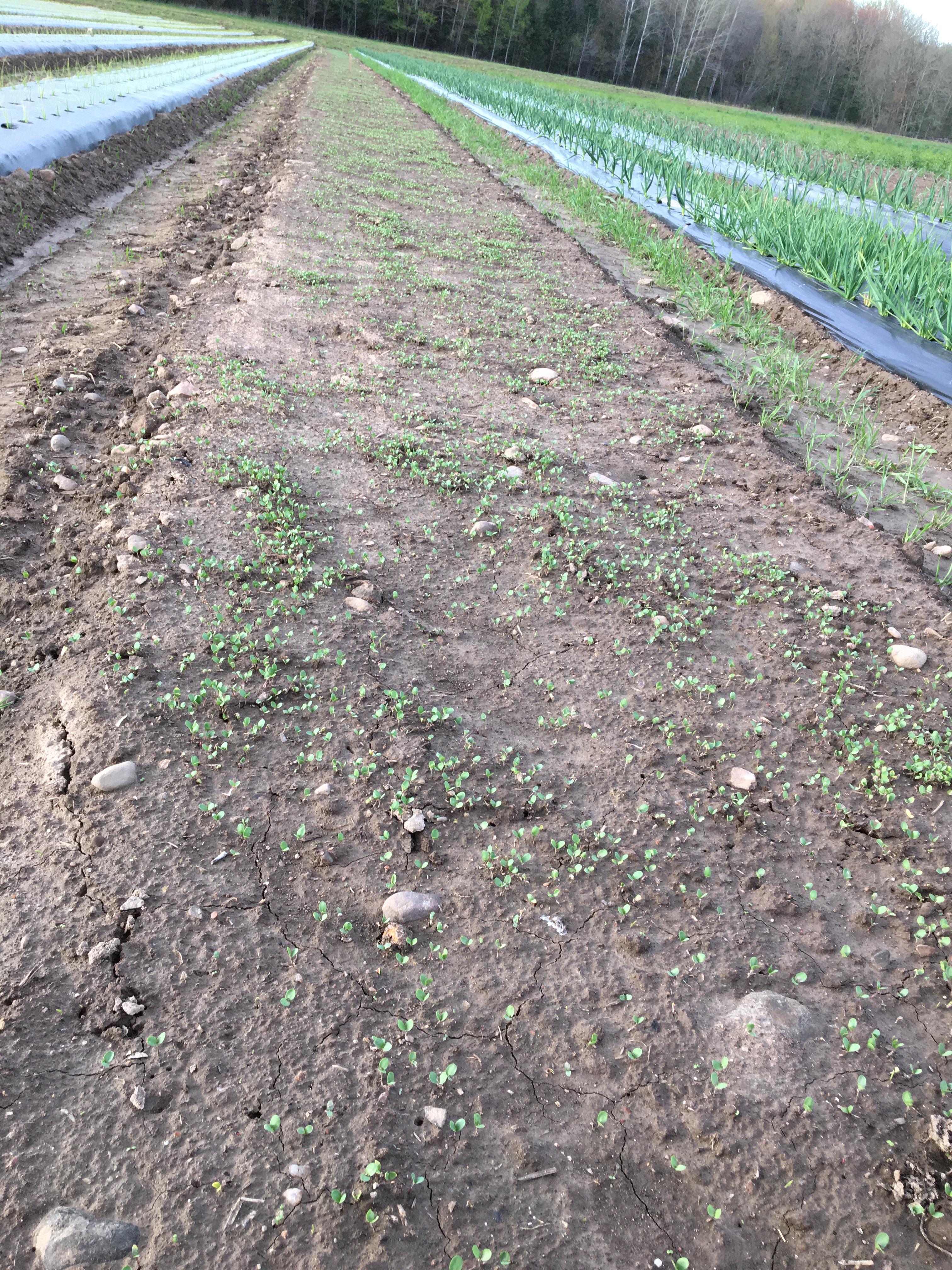
Left: Bed 1 (B1), picture taken in May after germination. The cat is Linus!! Yes he was named after flax. Right: Bed 2 (B2), taken on the same day.
I’m lucky enough to have employers who are happy to let their employees take on their own projects on the farm and give us space in their rotations to make that happen. When I came to them with my flax experiment, they were gracious enough to lend me a spare bed that would have otherwise been cover cropped. This year, with a bit more planning, they gave me a spare bed in their Brassica block (that means Bed 1 was planted right next to broccoli and kale). When I got news of some trials that I agreed to be a part of, I asked very nicely for another one of those spare beds and got one situated between the garlic and onions for Bed 2.
Bed 1 (B1) was sown on April 16th, 2024 and got rained in overnight. I’d been watching the forecast and chose the 16th because of the rain coming through. I planted it in 5 rows on a 4’ x 250’ raised bed. I used a recycled bed for B1 meaning that it was in its second year of use (last year it was a squash bed, or as I might say later on, it was in the Cucurbit block). While fresh raised beds start around 6” high on our farm, my recycled bed was approximately a 2” raised bed. This lowering happens in part due to gravity and the force of rain and snow load over a season, and in part to the way I prepped my bed for flax (I use a power harrow to get my bed ready for planting but that’s a story for another time).
I have several reasons for choosing to plant my flax in rows. The first is that because I have experience weeding and have access to specific tools thanks to my job on the vegetable farm. I know the more you can do to set yourself up for efficiency, the happier you will be; because you will spend less time weeding. That seems obvious but I think people tend to overestimate their time commitment. All that being said, using a tool makes the process go faster. I used a stand-up hoe variety called a stirrup hoe. We have two different sizes on our farm: a 4” and a 6” hoe. I decided I wanted to space my rows to fit the 4” hoe, so I could fit the five rows in the bed. Although, I’m going to be really honest and say that five rows barely fit on a 4’ bed.
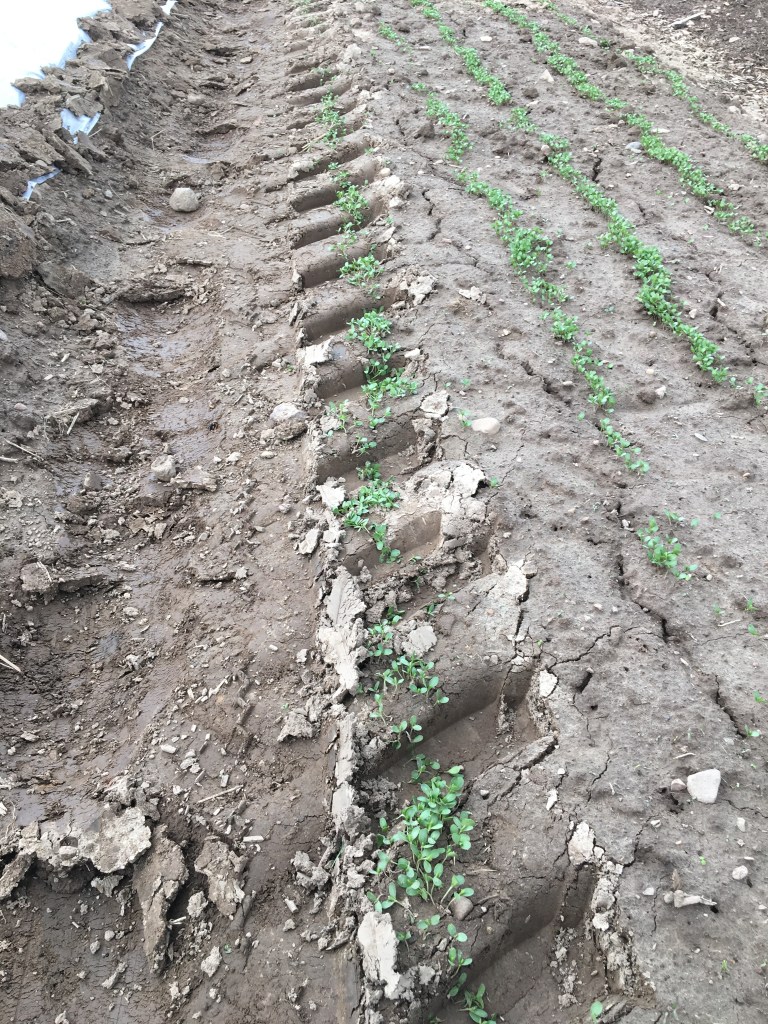
One thing I’ve learned while farming is that plants want to live. Even when your coworker accidentally runs them over…
The second reason I decided to plant my flax in rows goes back to the scalability of this project. My theory is that if a farmer decided to try this out on a larger scale, they would likely already have the equipment for drilling seeds in rows rather than equipment for broadcasting seed, so the small-scale experiments I am running might have more relevance to them. It also might make other vegetable farmers more interested in considering this crop to become part of their rotation if I can prove that it can be done with the equipment they already have.
I want to point out the drawbacks I have found to planting in a row. The biggest problems that I have run across is the physical planting and not knowing how much seed/acre I am putting out. I have access to an Earthway Seeder the farm uses to plant small amounts of seed outside or in small spaces like our hoophouses. While most of our direct-sow seeds get planted on a vacuum seeder attached to the three-point of the tractor, there are some situations when that piece of equipment is too big and the smaller piece of equipment needs to be used. I was originally planning on using the Earthway Seeder to plant my flax but found that 1) it didn’t lay seeds down at a thick enough rate, and 2) that our heavy, rocky soil type made it a frustrating piece of equipment to use over such a large area. I quickly ditched the equipment for a far simpler method.
To plant B1 I used a Ziplock bag with the corner cut off. I simply eyeballed the thickness of the seeds getting laid down; so you see the problem I have in not knowing how much seed I used. I simply don’t know how much I used and didn’t think to figure out a way to be more exact before I planted. It wasn’t until I was calculating seeds/acre on Bed 2 that I realized the problem. I think it would be valuable to spend some time this Winter trying to get the Earthway Seeder dialed in. And maybe even trying to come up with a method to make the less technical Ziplock Bag Method (patent pending 😉) be a little more precise.
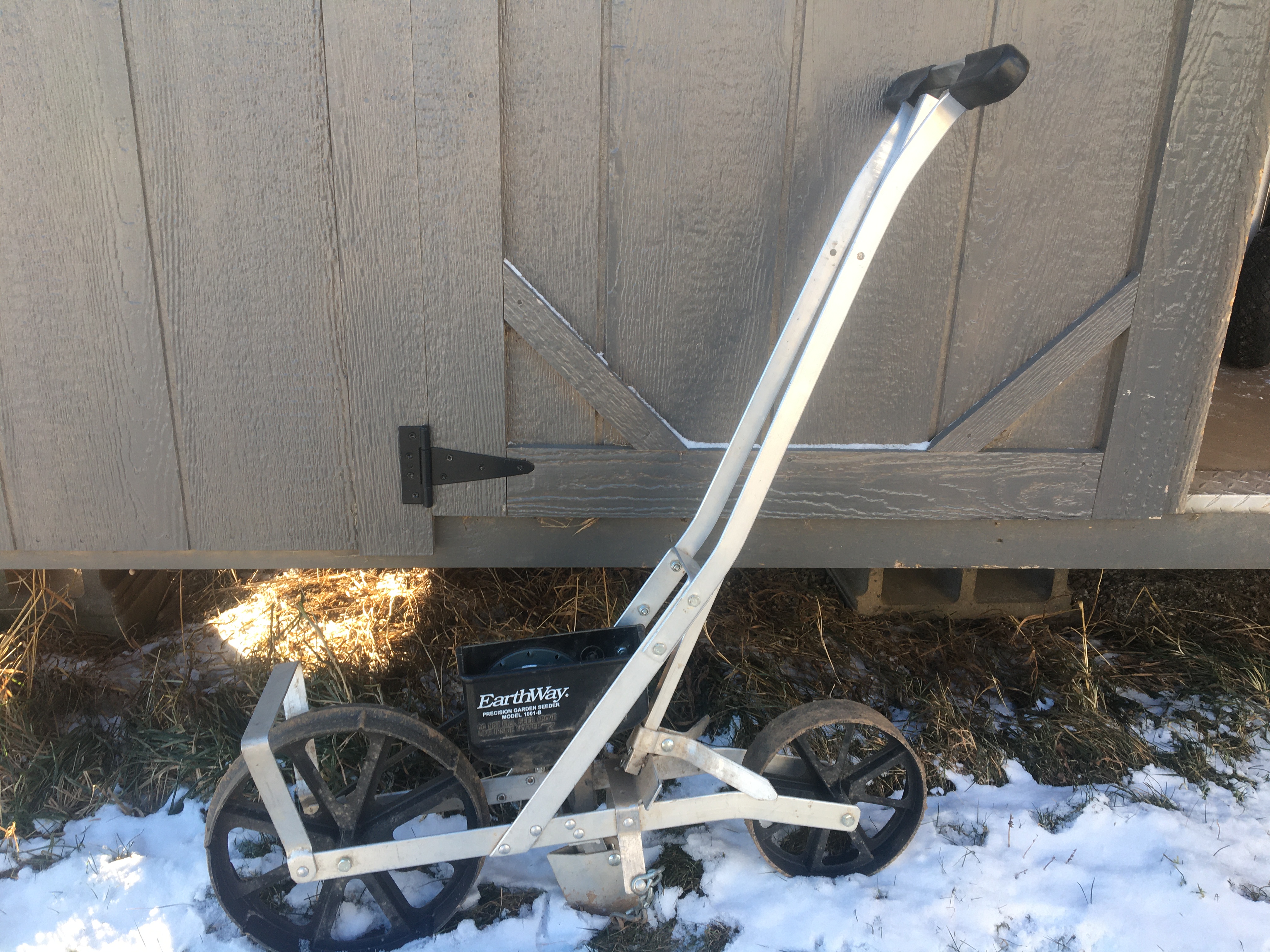
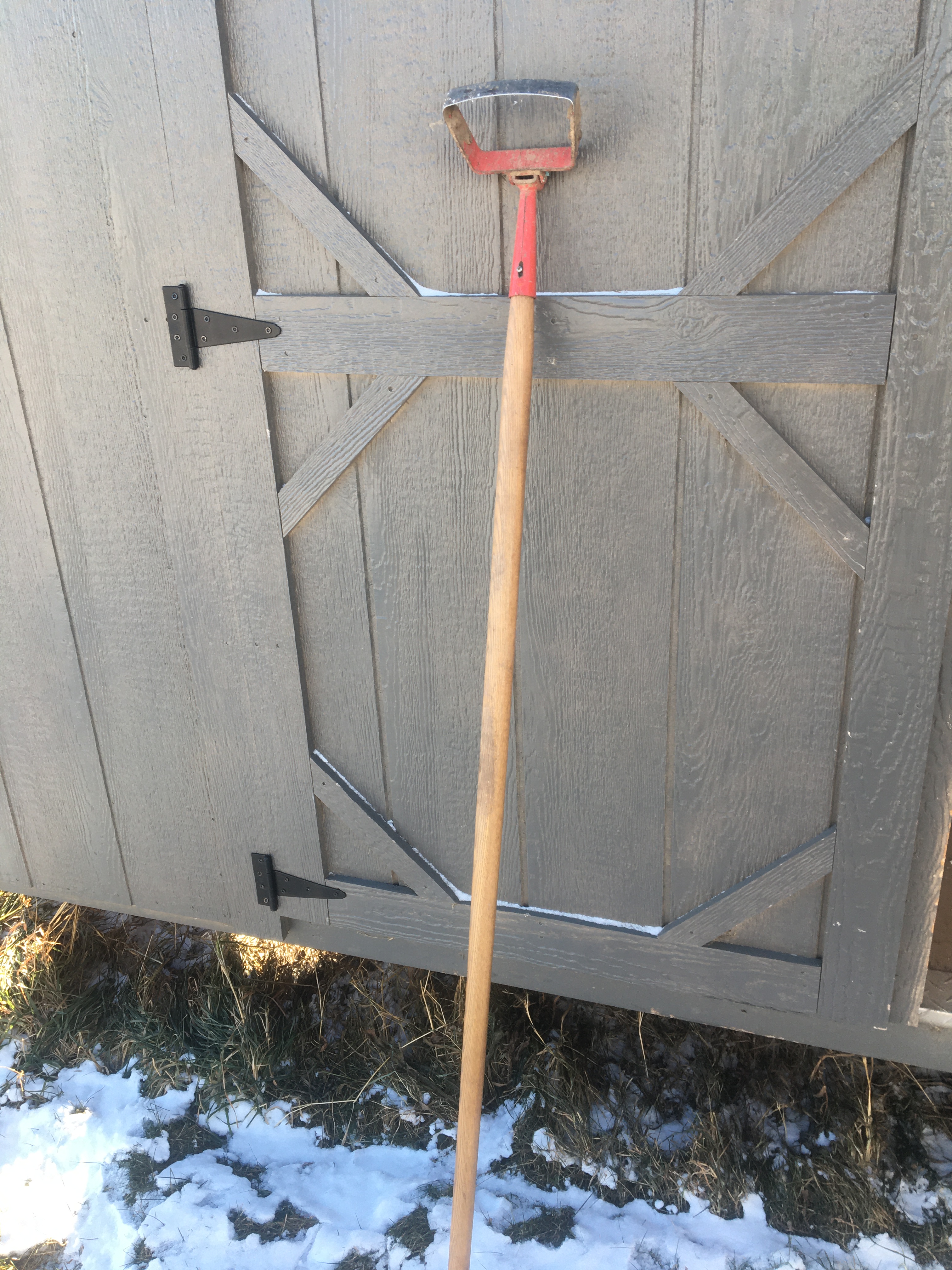
Left: Our Earthway Seeder. Right: One of our 4″ stirrup hoes.
As I alluded to earlier, I wasn’t planning on planting a second bed of flax, but Wisconsin Linen Revival (WLR) got in touch with me asking if I could replicate some of their trials so they could compare my results with theirs; and of course I was interested. I got their seeds after I planted Bed 1. After a waiting period to see where I could squeeze in a second bed, and waiting for the weather conditions to be right, I planted Bed 2 (B2) on April 25th, 2024. It got rained in the following day on the 26th. In B2, I decided to try out the broadcast seeding method. Since it’s the method that seems to be most commonly touted, I figured I’d give it a shot on this extra bed. I had the bed divided into three sections: two WLR Trials based on their specifications and one extra section from seed I had left over from B1. I was planning to weed the bed by hand since neither a stand-up hoe or a hand hoe would make weeding more efficient in a bed of broadcast seed. I knew it would take longer but was unprepared for the amount of work it actually took.
TL;DR
Bed 1 (B1) was planted April 16th. It was sown in five rows on a 4’ x 250’ bed using a Ziplock bag with the corner snipped off. B1 was basically stale seed-bedded for a year contributing greatly to the quick weeding time. I was able to use a stand-up hoe to speed weeding along.
I plan to attempt to dial in the Earthway Seeder this Winter because it is such a common piece of equipment found on vegetable farms. I think that flax could be an interesting crop for vegetable farmers to use in their crop rotations and think that dialing in common equipment could help convince growers to consider adding flax.
Bed 2 (B2) was planted April 25th. It was sown by broadcasting seed in a 4’ x 250’ bed. I used the chicken scratch broadcasting method. B2 came out of our carrot block the previous year which contributed to the intense weed load that B2 saw. I weeded the bed by hand being unable to use tools to speed the process along.
See below for a side-by-side comparison of the beds and my takeaways.
Side-by-Side Bed Comparison
Bed 1
- Planted April 16th, rained in April 16th
- Germinated April 30th (it took 14 days to germinate)
- Thinned: totaled 3.5 hours
- Weeded: totaled 3.5 hours using a stirrup hoe
- First flowers 6/18
- Ready for harvest: 7/14
Bed 2
- Planted April 25th, rained in April 26th
- Germinated May 4th (leftover seed from B1) and May 5th (WLR trial seeds, oil seed variety) (it took 9 days and 10 days to germinate, respectively)
- Thinned: N/A
- Weeded: totaled ~26 hours over the course of 3 weeks (finished 6/19)
- First flowers: 6/26
- Ready for harvest: 7/18
Takeaways
B1 was planted 9 days earlier than B2 but germinated only 4 days earlier than B2. B1 took 14 days to germinate. B2 took only 9 days to germinate. I would be interesting in getting soil temps on the date of planting if I replicated this staggered planting next year.
Despite the planting gap, B2 ended up being only 4 days behind by the time harvest season came around.
Because of the Ziplock Bag Method, my seeding on B1 could be a bit thick in places. I went through the bed and thinned out any overly thick spots resulting in an extra 3 hours of work that I didn’t have to do on B2 which was broadcast seeded.
B1, planted in rows and a bed that came out of our 2023 Cucurbit block, took me 3.5 hours to weed. I used a stirrup hoe that fit between the rows and finished the job after work over two days. B2 on the other hand, took me 3 weeks finish and by the end totaled about 26 hours. It was accomplished after work and on weekends, by hand, and with the use of many swear words by the end. I learned a valuable lesson.
At first, I thought that B2 was so weedy and hard to manage because of the broadcast method. I couldn’t use any tools so of course it took me longer. There weren’t more weeds than in B1, it was just that I was going slower so they had the opportunity to grow bigger and more aggressive. They were outcompeting the flax. But after the task had been long over and I had gotten some perspective on the situation, I realized something very important: because B1 came out of the Cucurbit block the bed was tarped the previous year. Because it’s impossible to weed Cucurbits after they start growing viny and start spreading, and it gets extremely weedy without intervention, our farm has decided to manage this problem by covering the ground with a barrier to keep weeds from growing, thus allowing the squash and pumpkins to thrive. And that makes the next crop to be planted there significantly less weedy. Additionally, as flax is planted so early in the year, very few weeds are around to compete with the small seeds. By the time the weeds start to germinate, the flax is already shading them out and have out competed them.
Conclusion
The problem was not the broadcast method. It was that B2 came out the carrot block. While we do a good job weeding our carrots, we can’t do anything about the seed bank just underneath the soil that’s waiting for the right conditions to germinate. Those seeds didn’t burn up under a tarp that created the perfect conditions for germination but the worst conditions for growing (no sunlight). The problem was exacerbated by the fact that I couldn’t use tools, but it would have taken longer regardless.
After I made this realization about bed preparation, I decided on a pretty simple solution: I have two beds saved from our Cucurbit block from this year. I decided to keep the beds covered for as long as possible so I kept the black plastic in place. I’m interested to see if this will significantly change the ground temp in the Spring getting the seeds to germinate faster like B2 did this year. Time will tell, so stick around until Spring to find out with me!



 Foxtail and Flax
Leave a reply to groovynightbebec388f6 Cancel reply