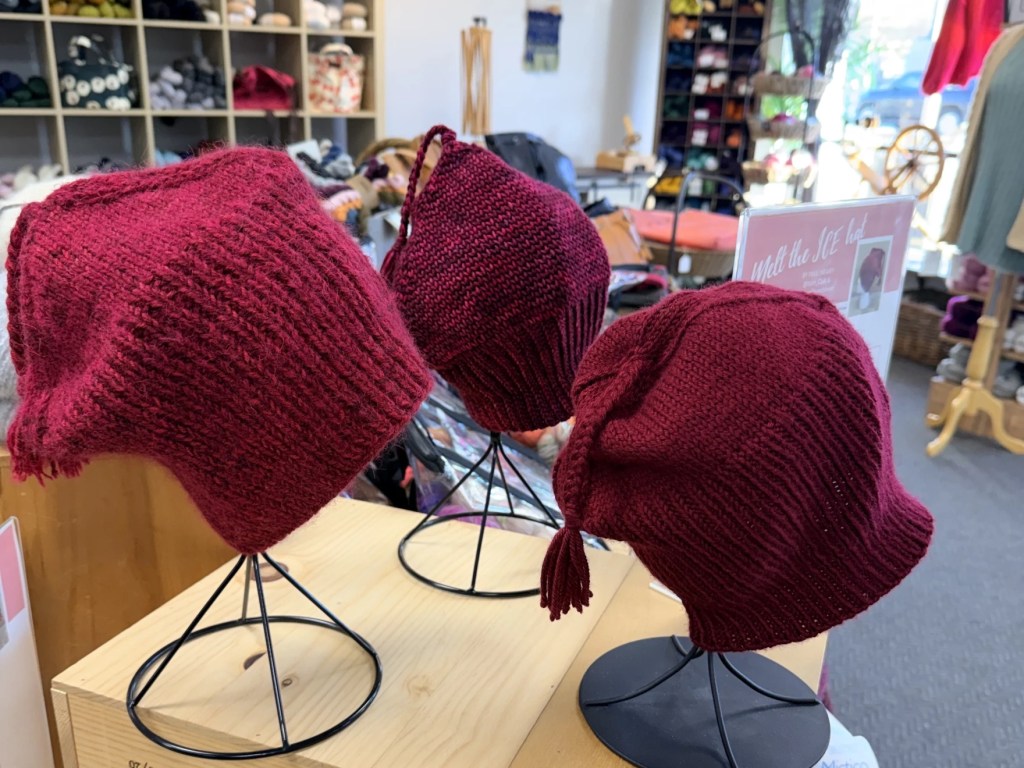
Photo taken from Gilah Mashaal, owner of Needle and Skein.
Introduction
I grew up in a family with avid knitters. My mother and older sister were, and are to this day, very skilled and passionate knitters. I was taught the basic knit stitch not long after they picked it up (I was maybe 7or 8?), but after I knitted the requisite scarf for my stuffed bear (very originally named Big Bear) of decreasing width and unplanned holes in the middle, I lost interest. Leave the knitting to the experts I said. And I may have happily continued on that way. Well maybe not happily: I grew up admiring the beautiful fabric and knit clothing created by my talented family, so I admit to preferring the look of knitted fabric over that of crocheted. A cable knit sweater?? Sign me all the way up.
But as you might have guessed, within the last couple of weeks I have in fact learned to knit. And its thanks in part to the violence our country has been witness to during the first month of the year.
Like many of you I’m sure, I watched in horror and helplessness as Minnesota was attacked and people were murdered. I spent more than one day glued to my phone and my computer reading the news, watching social media accounts, listening to podcasts. Regardless of that much news being bad for the system, it was like watching a slow motion trainwreck. I couldn’t look away.
I felt helpless and hopeless. During a doctor’s appointment I attended during those tumultuous weeks, the routine questions flagged me for depression; a very sudden onset of symptoms. I told her I wasn’t worried, I knew the cause. She told me to stop watching the news. Easier said than done. But I did manage to pull my head up out the quicksand to attend my monthly fibershed meeting. The feelings I felt were echoed around the room. What can we do? One of my friends had a very welcome idea. She told us that she came across a pattern that was created to raise money for mutual aid funds in MN. It cost only $5 but all proceeds went to help Minnesotans affected by the ICE raids. The catch (for me only, everyone else knows how to knit) is that it was a knitting pattern. Finally, a reason grand enough to teach myself how to knit and stick with a project to the end.
I know it doesn’t sound like much, but I’ve come to the conclusion in the past few weeks of chaos, that the best thing we can do right now is to stay busy. This isn’t going to change a damn thing but if it pulls my focus off of the bad things and allows me to channel my helpless rage into a hat that symbolizes resistance and helps provide assistance to my immigrant Minnesotan neighbors, then you can be damn sure that’s where Ill be spending my time.
The Pattern
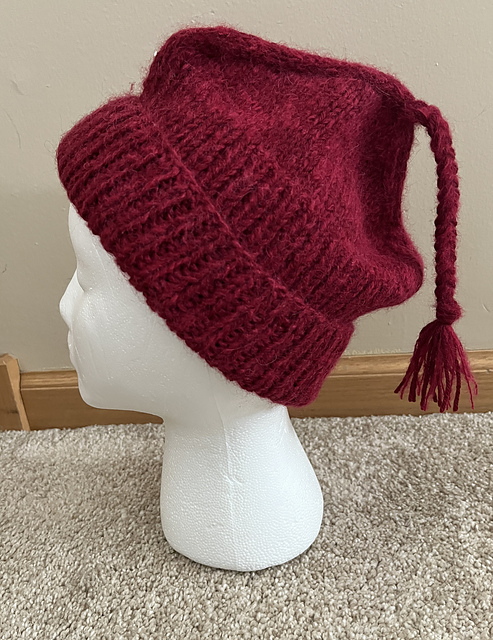
This hat was designed by Paul Neary of the Needle and Skein yarn shop in Minneapolis and is based off of a Norweigan hat used to protest Nazi occupation in the 1940s. The hats were called nisselue and were eventually banned. I was sent this pattern through Ravelry but you can find links on the Needle and Skein website as well. The pattern I purchased is for knitting but don’t despair if you are solely a crochet artist. He has a crochet pattern as well. The shop has donated a total of $250,000 to STEP and the Immigrant Rapid Response Fund, two organizations focused on providing housing support for immigrants in the St. Louis Park community.
Here is the excerpt from the pattern explaining a bit of the history and significance of the hats:
“In the 1940’s, Norwegians made and wore red pointed hats with a tassel as a form of visual protest against Nazi occupation of their country. Within two years, the Nazis made these protest hats illegal and punishable by law to wear, make, or distribute. As purveyors of traditional craft, we felt it appropriate to revisit this design.
All proceeds from the sale of this pattern go to the immigrant aid agencies who will distribute the funds to those impacted by the actions of ICE.”
In an NPR article I read about the Melt the Ice Hat project, its described as a quieter form of protest, since not everyone can show up to the picket lines, cameras at the ready. And makers are always looking to keep their hands busy in times of either crisis or joy. Think about what your first thought is when you hear that your best friend is getting married, your sister is having a baby, your neighbor was diagnosed with cancer. We want to make something to celebrate or bring comfort. In this case, we want to visually express the resistance we feel as we move through our everyday life; on our way to work, the grocery store, to pick up kids from school. Makers need to do something with their hands to make themselves feel useful and we all know the love and care that goes into making something with our hands. And so while it is a form of quiet resistance and solidarity, it’s inherently a loving one.
The History
The nisselue started showing up sometime around the final major protest of Nazi occupation of Norway in September 1941. This was wartime, a dark and hopeless time for the people of Norway and Europe especially. The hat was meant to boost morale, hope and represent a bright spot in a time of despair. I can almost imagine the hats acting like a single candle flame in dark tunnel, or as if the world was all black and white and gray and the hats were the only spot of color, letting people know that brighter days were coming. You would leave the house to go to work in the morning and wouldn’t have to say a thing as you passed a stranger in a red hat; you would simply feel connected and an just a little bit lighter together.
But hope is the feeling that needs to be crushed in fascist governments. You have to make your people feel like they are alone in their feelings of resistance. And so, the hats were outlawed by the German overlords. No hope. No future different from the one they had forced upon them. No solidarity with people who felt your same feelings of outrage.
Us
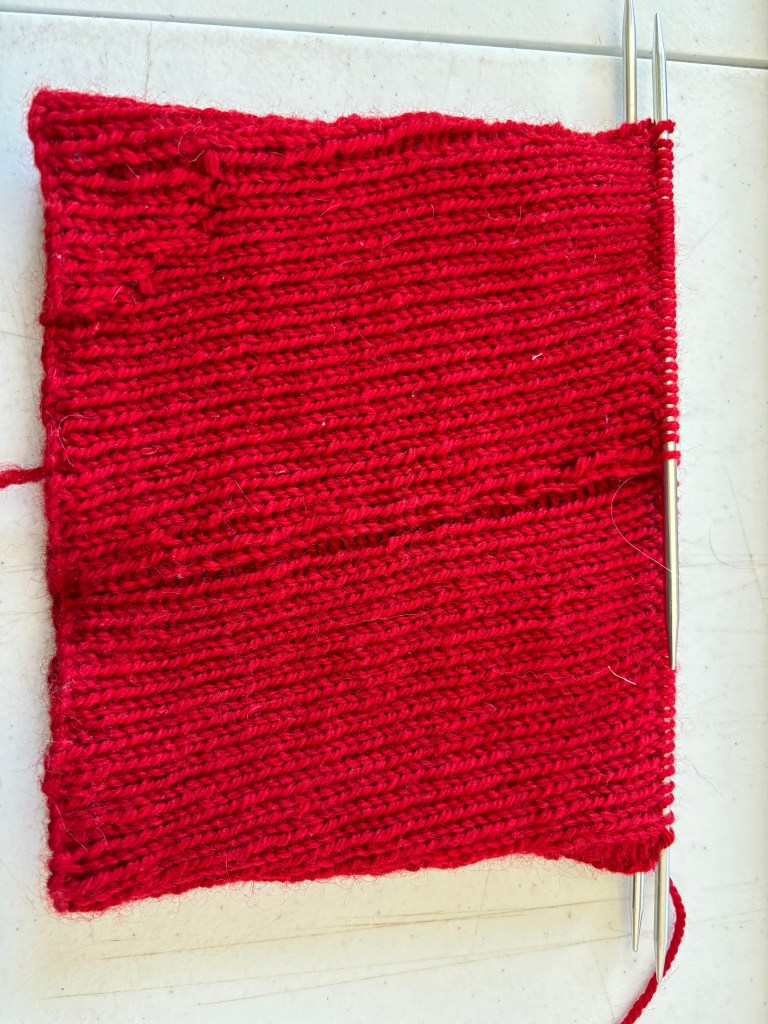
Luckily, most of us in the US don’t have those same worries today. Yes, there are frightening situations that must be stopped. Yes, there are people living in our country legal or illegal, that ARE living in fear. And yes, the people who are not living in fear right now must be the ones to speak up and demand change for better systems. But we are not to the point where our protests (no matter how small) are being put down and banned. We are not to the point where we need to fear speaking up and making our displeasure known. And walking around outside in a red hat whose history stretches back to Nazi resistance to show our solidarity with our immigrant neighbors, family or friends is a great way to start. Keep your hands busy, focus on love and warmth, think about how you can make your own community a warmer and more welcoming and safe space for everyone. Even the people you might not understand or relate to. I’m hoping that if you make this pattern yourself, you will be inspired to find other ways to build community, but if the only way you can do that is by purchasing a pattern that supports immigrant communities in Minnesota I suppose I can accept that. After all, as Bad Bunny pointed out,
“The only thing more powerful than hate is love.”



 Foxtail and Flax
Leave a comment