
Intro
Processing fiber interests me. I don’t have a good reason other than I think its interesting to take the wool off the literal back of a sheep, or a plant grown from a seed, and turn it into something useful and beautiful to humans. It takes work but I think that’s what makes it special.
Last summer one of my goals was to learn how to wash raw sheep fleeces. I was getting really into spinning at that point and I realized that I couldn’t afford to buy ready to spin roving braids if I wanted to keep it up at the pace I was going. Buying raw fleece is a cheaper option, would bring me closer to the farmers and the sheep, and would force me to learn a skill I was interested in. Thanks to two fiber festivals in my area and a shepherdess friend who trades fleece and meat in return for helping her load her market lambs, I acquired five fleeces to get me started in my quest for fleece washing knowledge.
Summer Fleece Washing
I skirted my fleece on a folding table I made from wood scraps and wire mesh. I set that up on sawhorses. I found that while overall I am happy with its construction and form, it should have been just a touch bigger to accommodate a fully laid out sheep’s fleece. Those things are big when laid out flat.
I decided I would use an old, cast-iron tub that had been stashed away in the farm weeds to wash my fleeces. The tub had once been used for a series of farm events we used to throw back in my early days at the farm. We hosted dinners for our CSA members and the tub held kegs of local beer on ice. We’ve long since ditched those events, so the tub has remained useless until I dragged it down to my house (using the tractor, I don’t work that hard…) to wash fleeces.
Now bare with me a second. Its about to get silly…
I positioned the tub so I could open a window in my kitchen and run a hose from my kitchen sink faucet to the tub to fill with hot water. I don’t have any photo evidence of these shenanigans but let me assure you that it was as janky as it sounds. However, that was the only reasonable option. I have an on-demand water heater that only heats water up to 120°F. That’s plenty warm enough for everyday use but to clean fleeces I was looking for water temps in the 140°F range. So to make up the deficit, I borrowed a turkey cooker from my neighbors, pulled out my canning pot and filled it with water to boil, to augment the temperature from the house.
This worked alright. But as you might imagine it got tiresome. It was heavy and hot, and since I wasn’t sure how much water I was putting in, I also wasn’t sure how much soap to put in (I use Unicorn Power Scour). So I just dumped some in (definitely waaaayyy to much). I washed three full fleeces in one day and let me just say…. I was cranky by the end. I had no way to easily pull the fleeces out of the tub so I just hefted them out after draining the water. Oh yeah, and one of those fleeces was a 9 pound fleece from a Ram. Try lifting that, soaking wet, out of a tub and into the rinse tub while its still 140°F. Not fun.
But I did get through all five fleeces this way. And I was pretty pleased with my first attempt. As you might imagine, I learned a lot. And I decided that the system was not going to work as is. So, some adjustments needed to be made.

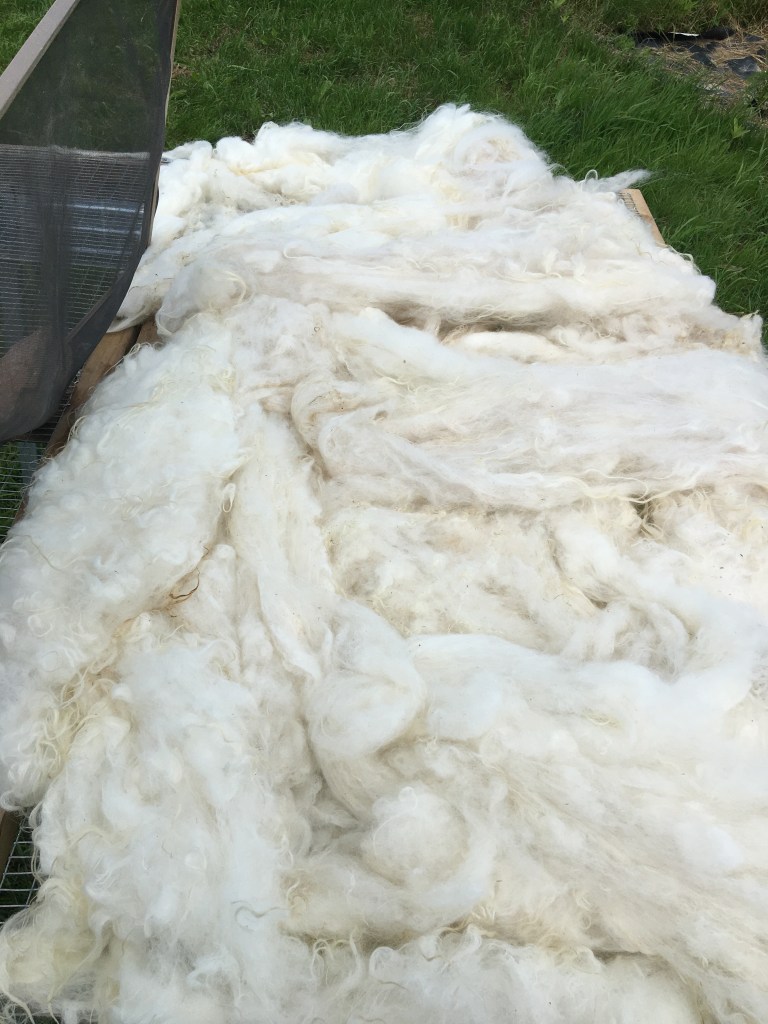
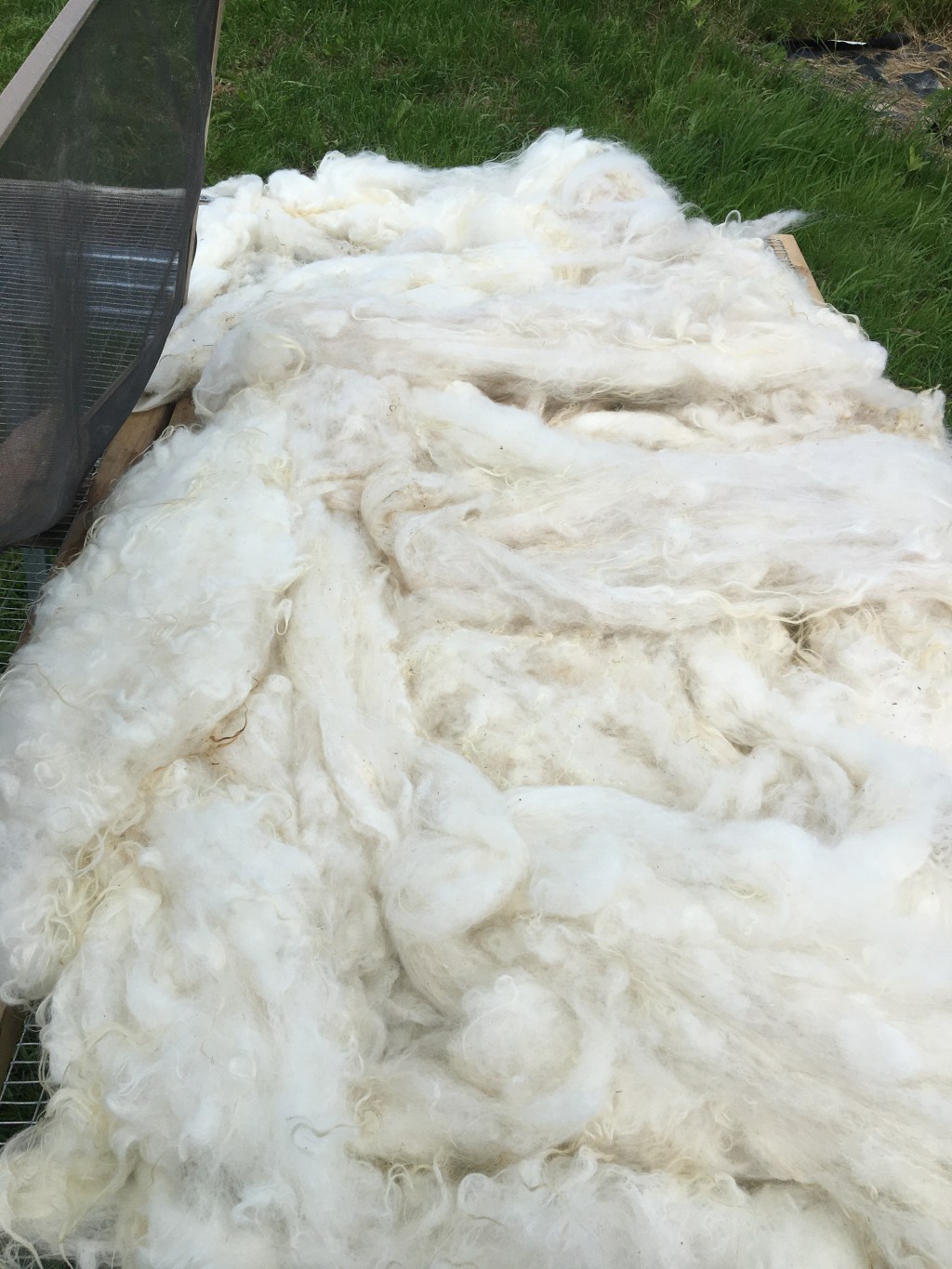
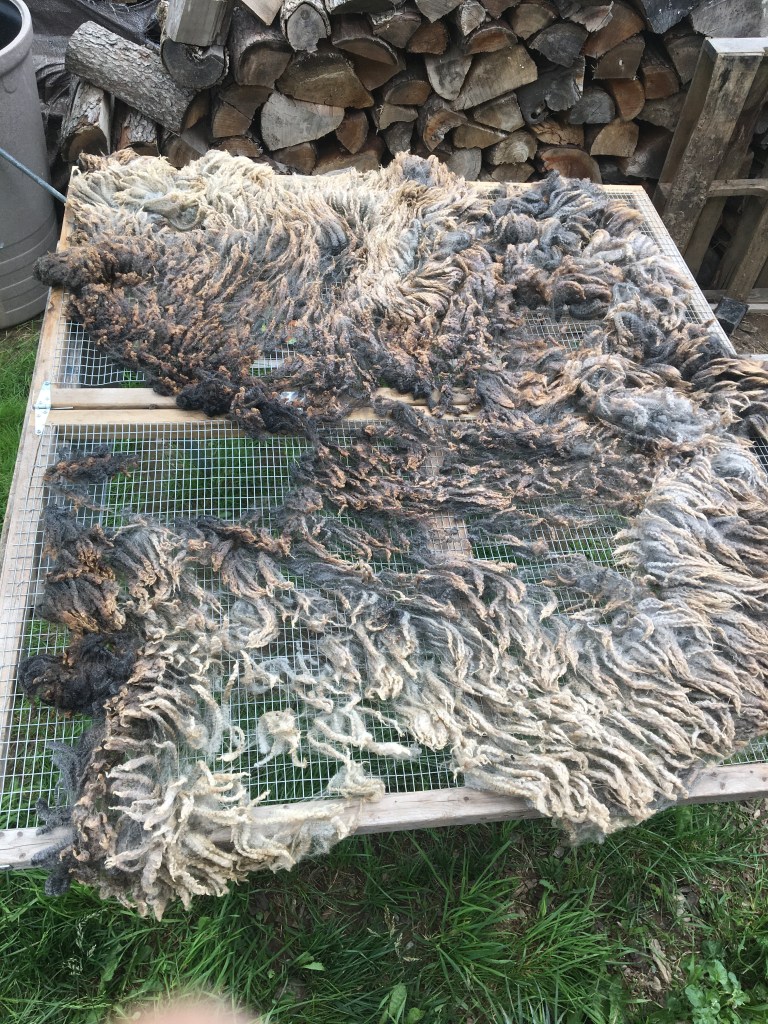
A sampling of some of the fleeces I washed last summer on the drying table.
Winter Fleece Washing
This past November I was sitting in a circle of friends working on projects and chatting away, when one of the women happened to mention that she had an overflow of fleeces just waiting to be washed and used some day. They were stuffed all over the place with no plans to do anything with them on the table. And a light bulb went off. I told her that I wanted to practice washing fleece; how my Summer fleece washing had gone okay but I wanted to improve the system and just get some hours in. I offered to help her wash some of her fleeces, free of charge, and in return she offered to help me process some of my flax. The deal was struck.
I waited until after the holidays to request fleeces from her to get started. And that time has come. I picked up two Babydoll Southdown fleeces from her this past weekend and I kind of couldn’t wait to get into them. I didn’t know anything about that breed and I’ve never worked with any down breeds in my short time working with sheep fleece. She told me that they are used for rug yarn; very coarse wool and basically useless as they were breed primarily for meat with the wool as an after-thought.
Well, well, well. Let me tell you. This wool and breed is not what I thought it was, once I started doing some digging around for information on the Babydoll Southdown breed. This post is going to be washing specific but in the next post we’ll be getting into the specifics of this breed. It honestly gave me quite a surprise when I started doing the research, since it didn’t match up with the information I was given.
But I digress.
The skirting was a bit of a nightmare. I moved the operation into my house as there was a zero percent chance of my doing this outside in the January negative degree temperatures we have gotten this past week. I laid some junk sheets down to catch the debris, set the skirting table up on some pieces of furniture I moved to give the table some legs and dumped out the first fleece. I had to be more careful than usual because I didn’t want any debris flying all over my house. No aggressive shaking to dislodge any second cuts, hay or…. other things caught in the wool.
As expected, it was quite dirty, and full of hay. It makes sense honestly since the shepherdess’s information was that the wool would be used for rug yarn; if at all. I spent about 8 hours total skirting the first fleece. I think I’ll try to be a little more ruthless on the second fleece. That should make washing go easier. You’ll see evidence of this later on.
Then I moved on to scouring. Again, this has been moved inside for the winter. I went digging around on the interwebs and Instagram for some different methods to try after the Summer washing session. I came across MellyKnits. Her method seemed much easier for me to handle and so hers is the basic method I am using. I will tweak from there as needed but I liked having a method to start with. I won’t go into too much detail on what I did and instead let you go check out her scouring video yourself if you are really interested. She’s a professional.
I started the first round of scouring with two 5-gallon buckets. I filled them with water that was between 140 and 145°F. Yes, I did still have to boil water on the stove but it was a muuucch smaller quantity needed since I only needed to augment the temperature of a single bucket at a time. I weighted out 1 pound of wool and put it in a mesh bag. I had two different kinds of bags: one a really fine mesh and one a larger mesh.

I found that the finer mesh bag was quite narrow and not very big. There wasn’t much room left over after the wool got stuffed in. I cut the top open to make a little more space, which helped but it was still a problem. I ended up sewing two fine mesh bags together to make one larger, more roomy bag. More on this later.
I followed the MellyKnits formula and did the first scour with 2 tablespoons of detergent, the second scour with 1 tablespoon and followed that by rinsing two times. I used cooler water for the rinses, coming in somewhere in the 135°F mark. I did rinse the 2nd bucket one additional time (total of three rinses) because the water seemed still too murky after the second rinse.
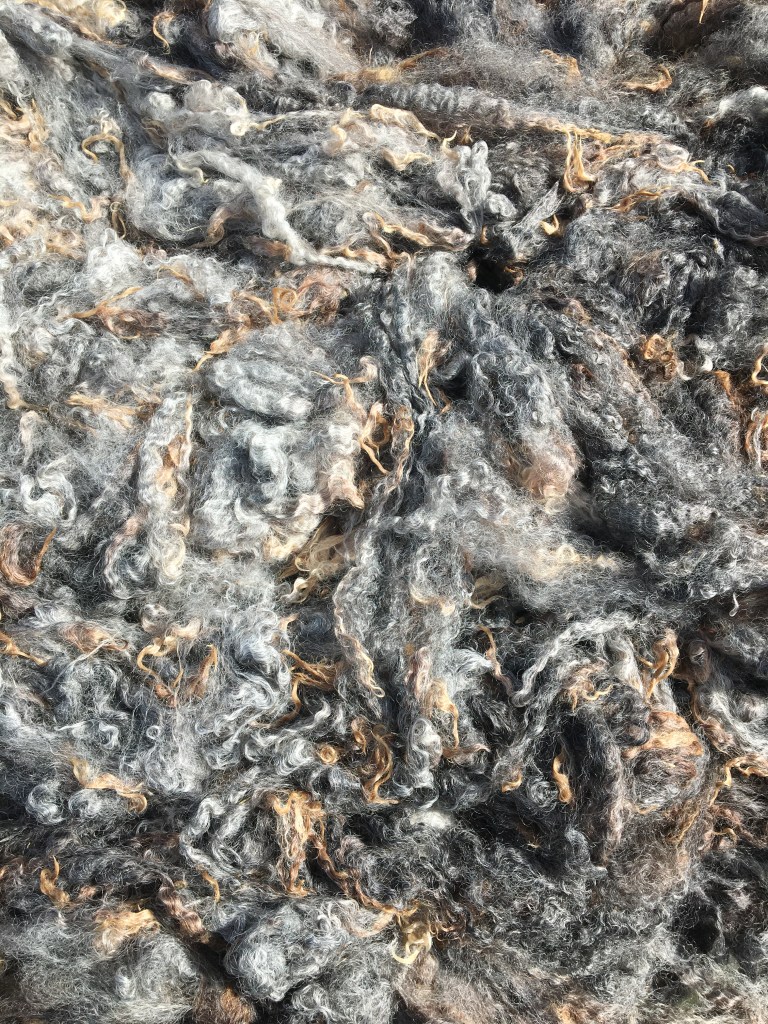
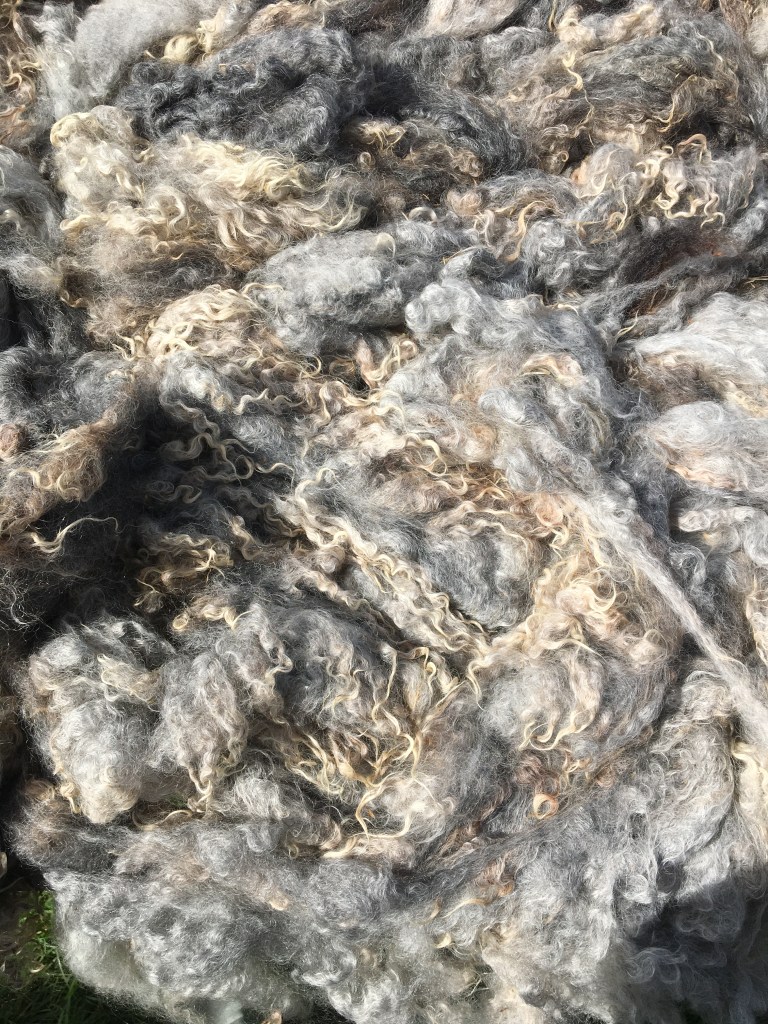
My results were…. meh. Still not really what I’m looking for from a clean fleece. But definitely cleaner than how they started!

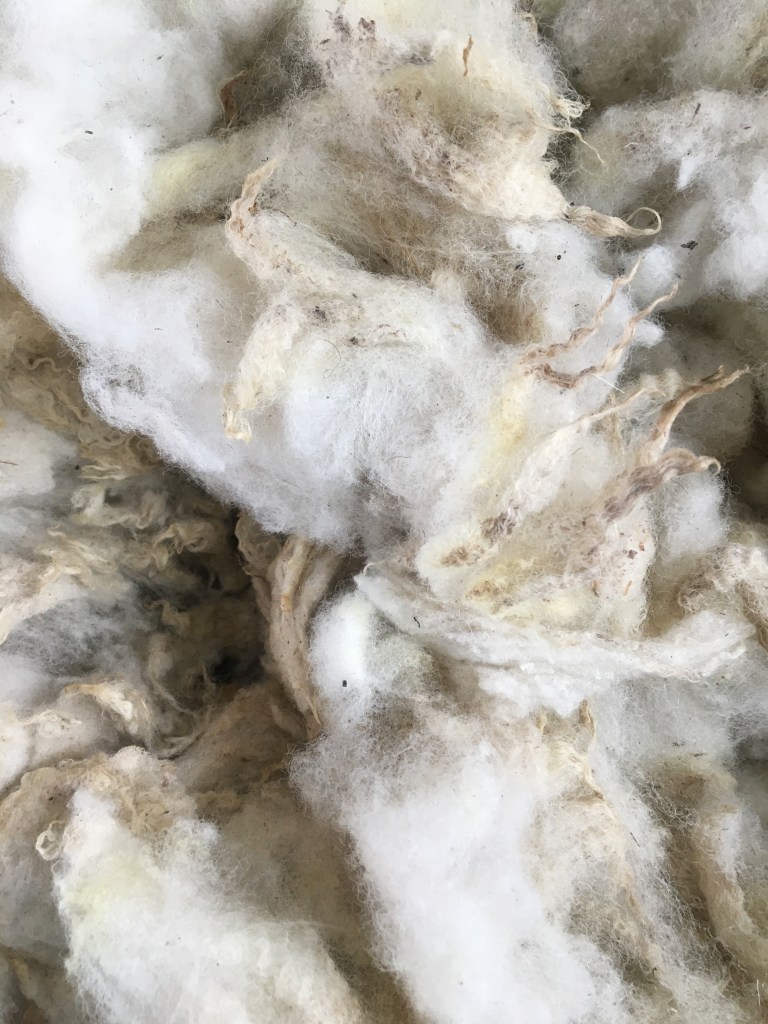
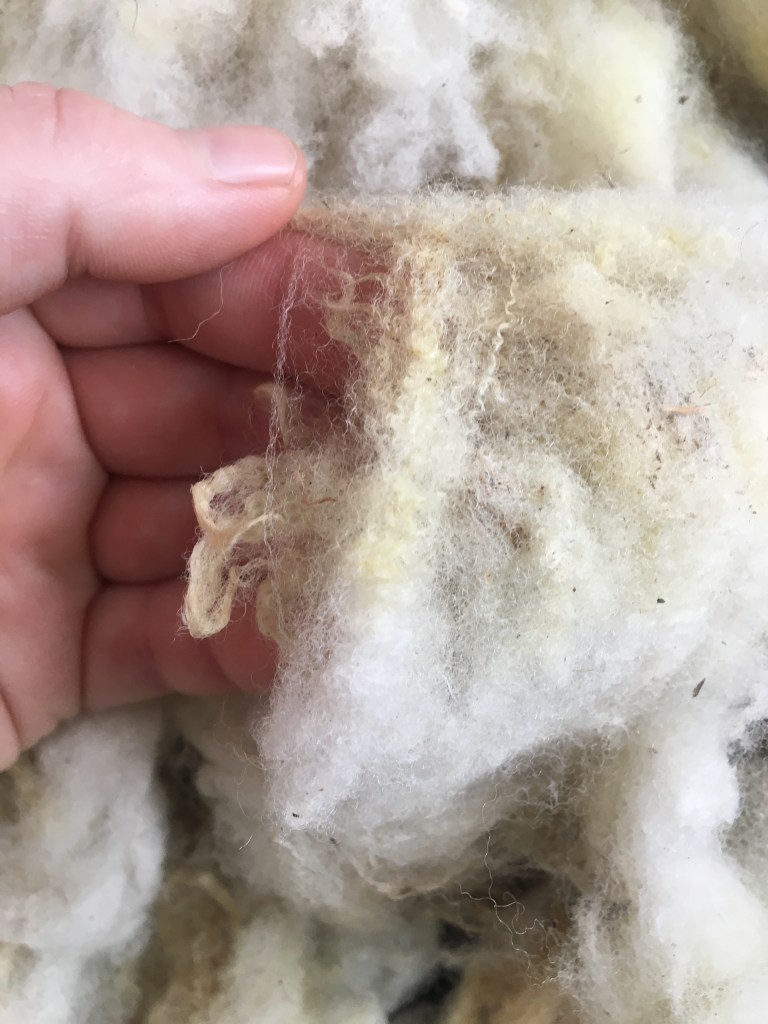
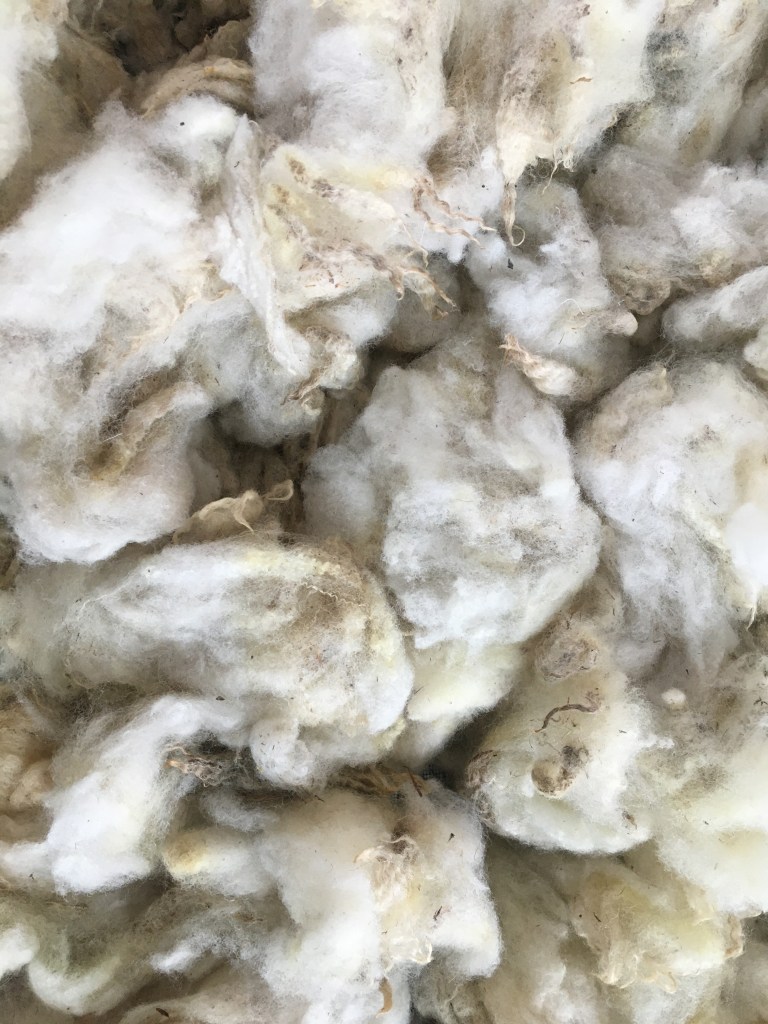
Bucket 1 photos above. Bucket 2 photos below.
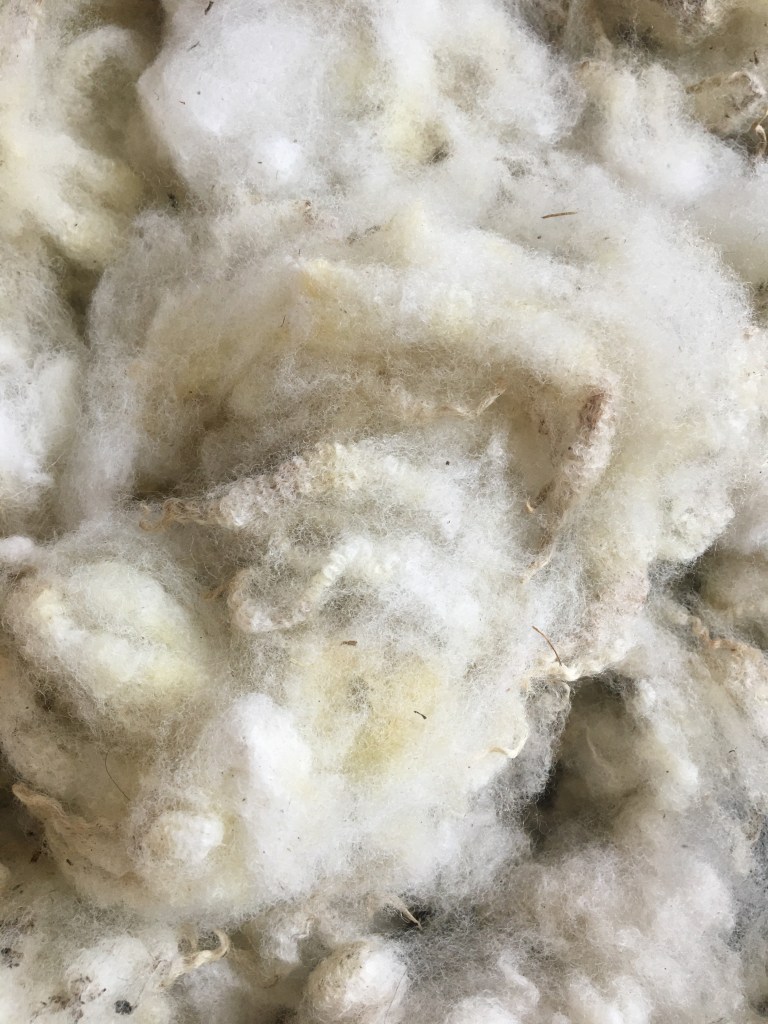
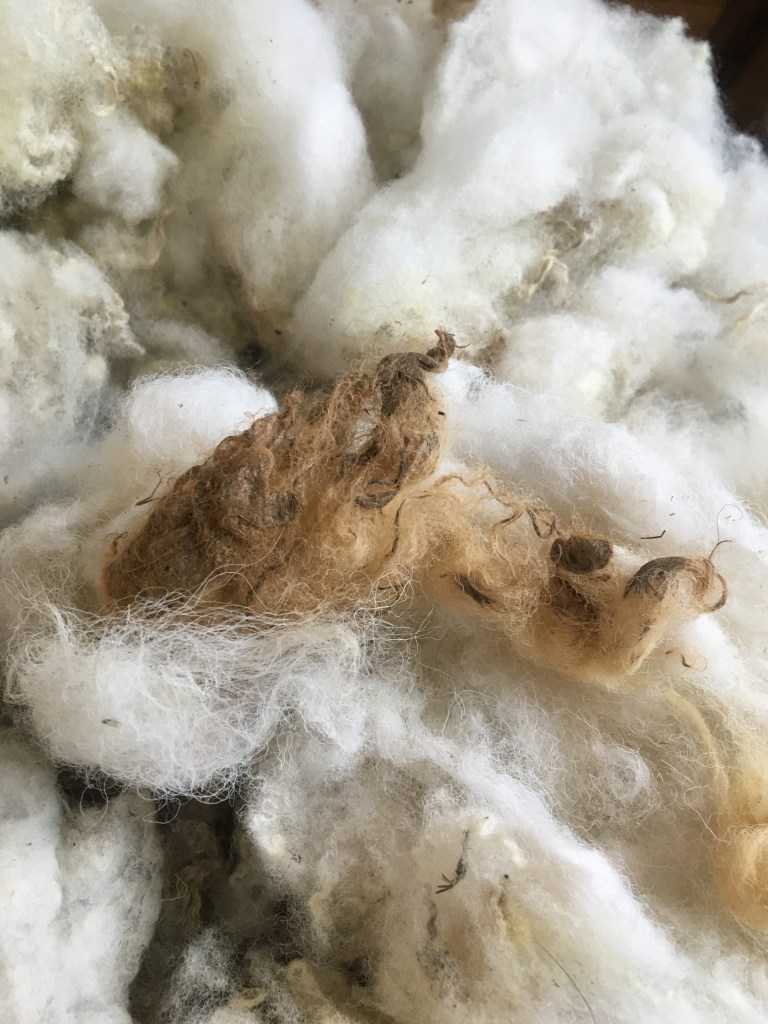

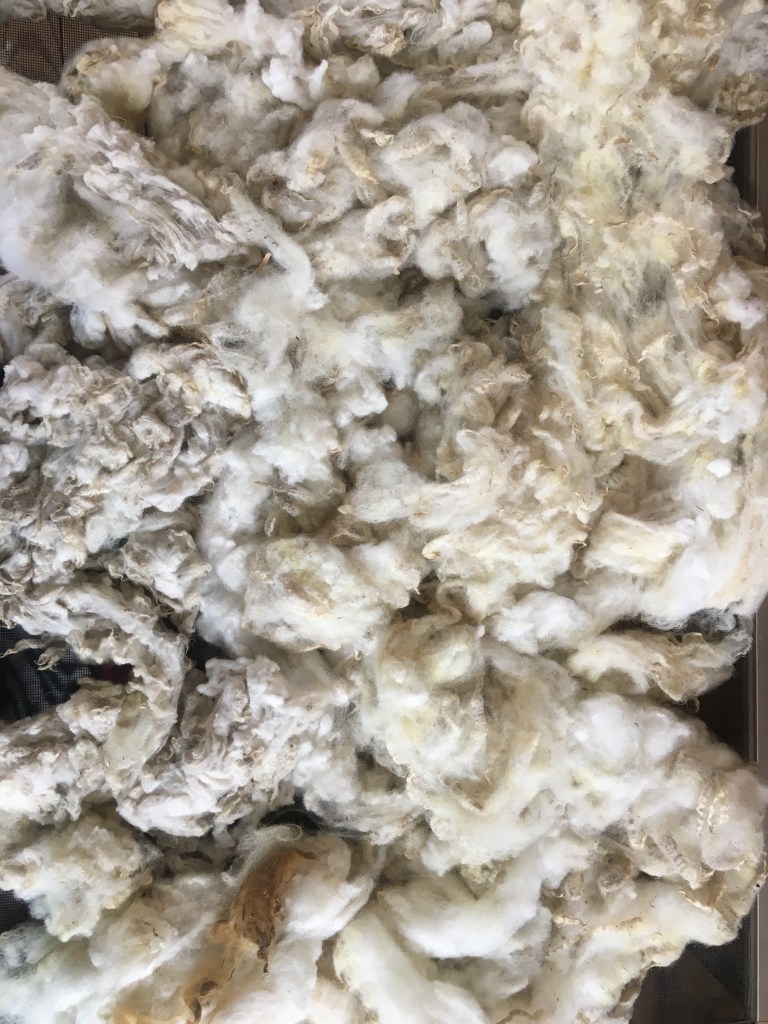
The tips didn’t really get cleaned and the inside of the wool really couldn’t get clean. Here’s my guess: the buckets were too narrow and kept the wool packed together too tightly, not allowing the inner dirt and junk to escape into the water. Additionally, the narrow, fine mesh bag made that problem even worse, making the water in that bucket (bucket 1) seem cleaner when actually the dirt from the center just couldn’t escape. That’s why I had to give bucket 2 an additional rinse: the wider, larger mesh bag allowed the wool to open up better and let the detergent get at the wool in the middle. Another problem I noticed is some yellow staining on the “clean” wool. This could be because the fleeces have been sitting awhile and the lanolin and muck has stained the wool permanently. I don’t know how old the fleece is so if this problem persists regardless of better washing practices from yours truly, then that is probably the issue.
I’m not going to rewash these first two pounds because I am curious to see how much the carder will take out. I did make some adjustments for the next round though. Aside from making the fine mesh bag bigger for the wool to really expand, I used wider buckets, again hoping that this would allow for more expansion of the wool and more penetration of the soap and hot water.

Round 2 was a much bigger success. I repeated the process the next day using the same basic process and adding the slight adjustments described above. Although there is still room for improvement, just making those two small changes made a huge difference. The extra room in the bag and the two buckets really helped the detergent and hot water do what they are supposed to do. The yellow staining however, still seems to be a problem. I don’t think there is much I can do about that other than making sure my own fleeces don’t sit for too long.
I also spun out my two bags in my washing machine which will decrease drying time and seemed to make the fiber fluffier when I dumped it out on the screen to dry. I would say that bucket 4 was the cleaner of the two in this round and that probably has to do with the fiber weight. I couldn’t get quite a pound of wool in the final bucket because I ran out of wool. It ended up being the final 12 ounces of wool of the fleece. The soap and heat had more room and less fiber to work its magic on so it got just a touch cleaner. That’s my theory at least.
When I scour the next Babydoll fleece, I plan to try one of two options to further improve the results. I will either do a 25-30 min 1st scour with temperature and soap amount staying the same, or I will raise the water temperature on the 1st scour to between 150-160°F leaving the time and soap amounts the same. I’m leaning towards trying the second option first. I have also thought about adding a pre-soak since there is so much caked on filth. Maybe it could help break up those dirty tips?

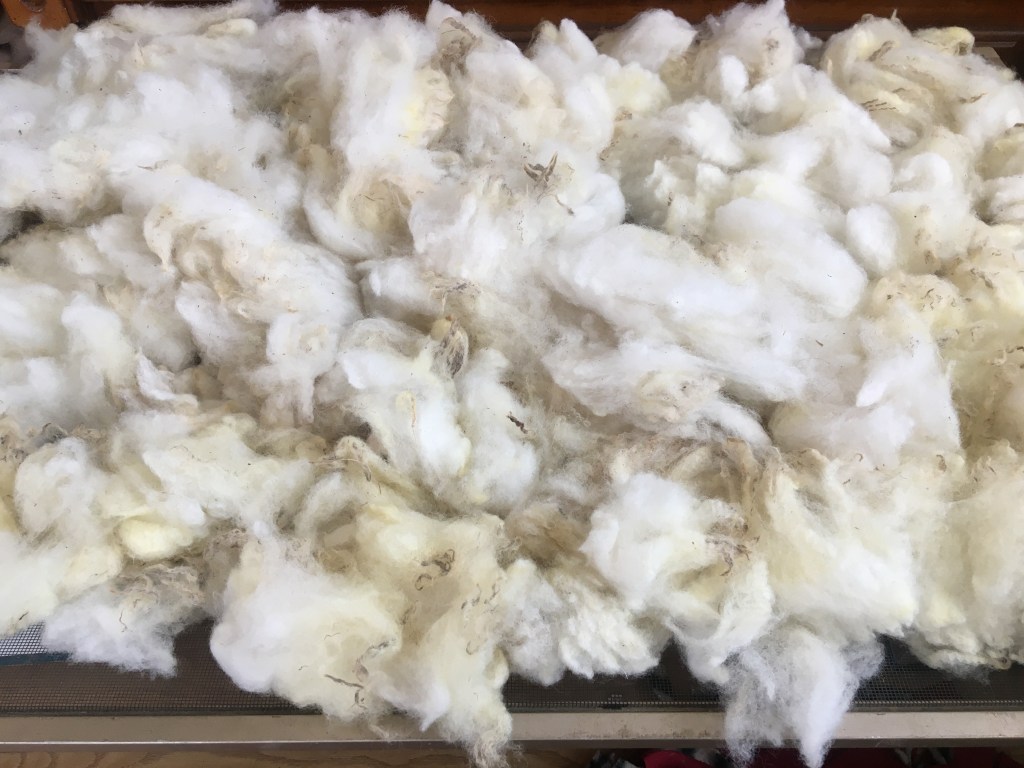
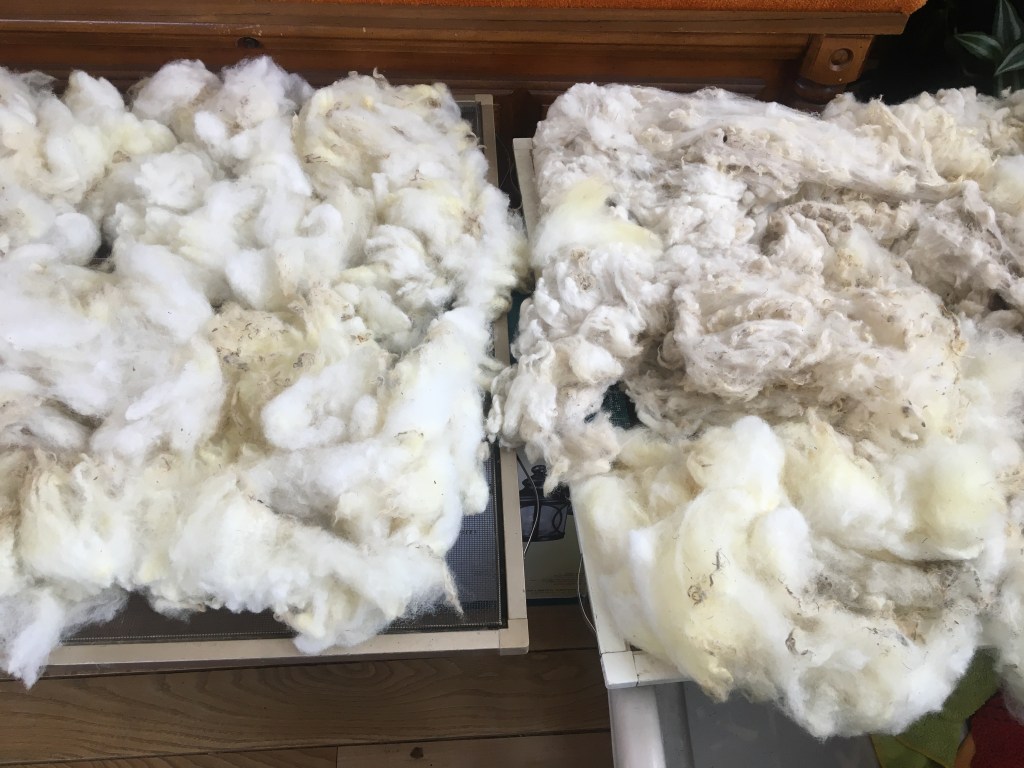
You can tell that bucket 4 is just a touch cleaner thanks to the smaller amount of fiber in the bucket. You can also tell that there is still a fair amount of dirty tips.
Conclusion
Overall, I’m happy with the results from my first Winter fleece washing. I was able to see an improvement between the two rounds which is, if nothing else, the direction I want to be moving. I would prefer to do this outside but this is the best option I have this time of year and at this moment.
I am not sure yet how this new method will translate to the Summer months. I envision a marrying of the two methods: the whole process will take place outside. I will continue to use the turkey cooker to heat water but the water will be poured into buckets rather than a large tub. I do find this new method easier. No super heavy, wet and burning hot fleeces to transfer; just a manageable bag to lift out, easy as you please.
I imagine that learning to wash fleeces is a year’s long project. There are so many different kinds of breeds and so much variation within breeds. It’ll be a fun challenge not only learning a skill that interests me but also uncovering information about the breeds that I’m washing. A fascinating journey all around!




 Foxtail and Flax
Leave a comment