
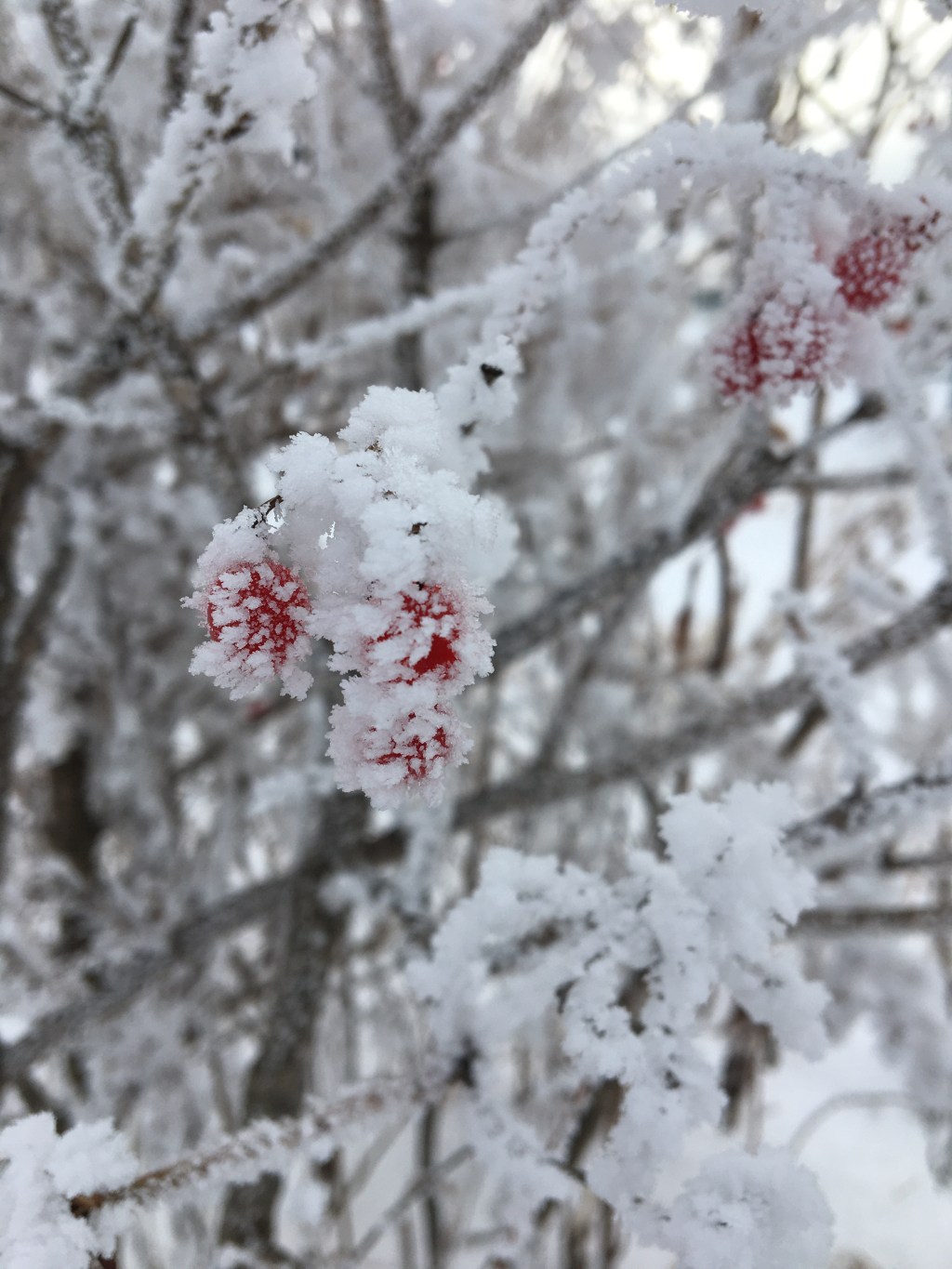
Living in Wisconsin, you really get to know all the Seasons. There’s Spring, the time of rebirth and mud. Summer, our shortest season, is a time of fast and intense plant growth, time spent at the lake, and spending extra time outside as much as possible to enjoy the heat and sunshine. Fall, is a time a intense color change and the nagging feeling that at any moment snow could start falling. And Winter. So many people bash Winter for being cold and dark and they aren’t necessarily wrong, but I think there are better ways to think about Winter. Having such a seasonal job as farming has opened my eyes to what it means to live seasonally. I’ll dig deeper in that topic in later posts; for now let’s talk about how my flax work shifts for Winter.
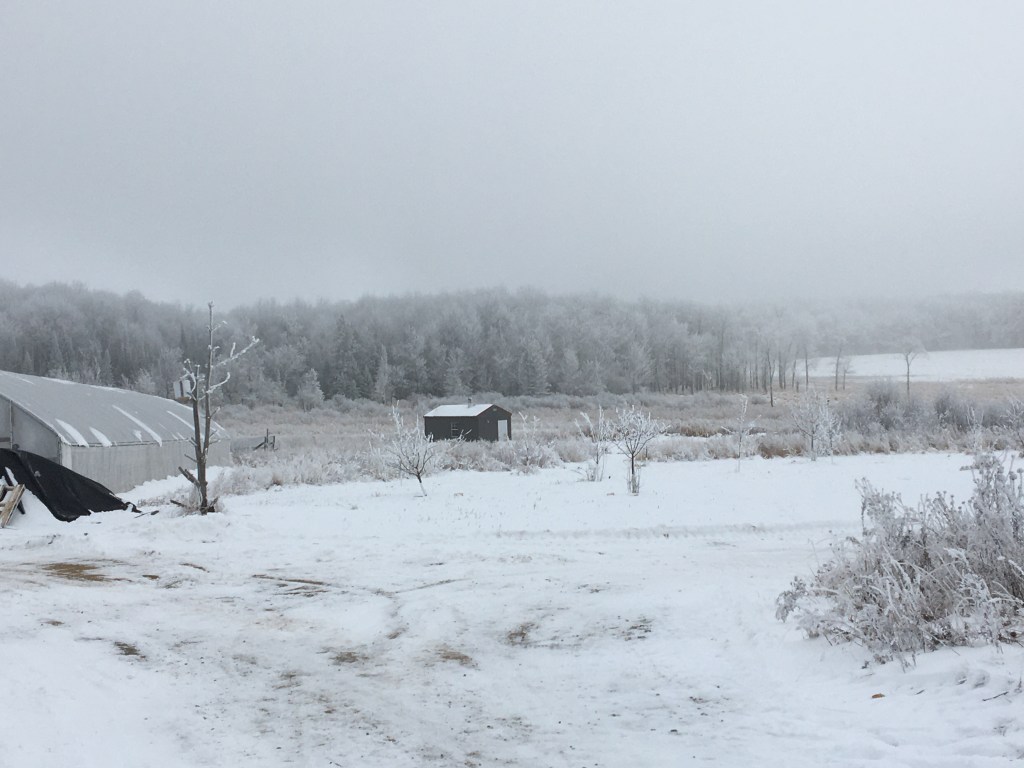
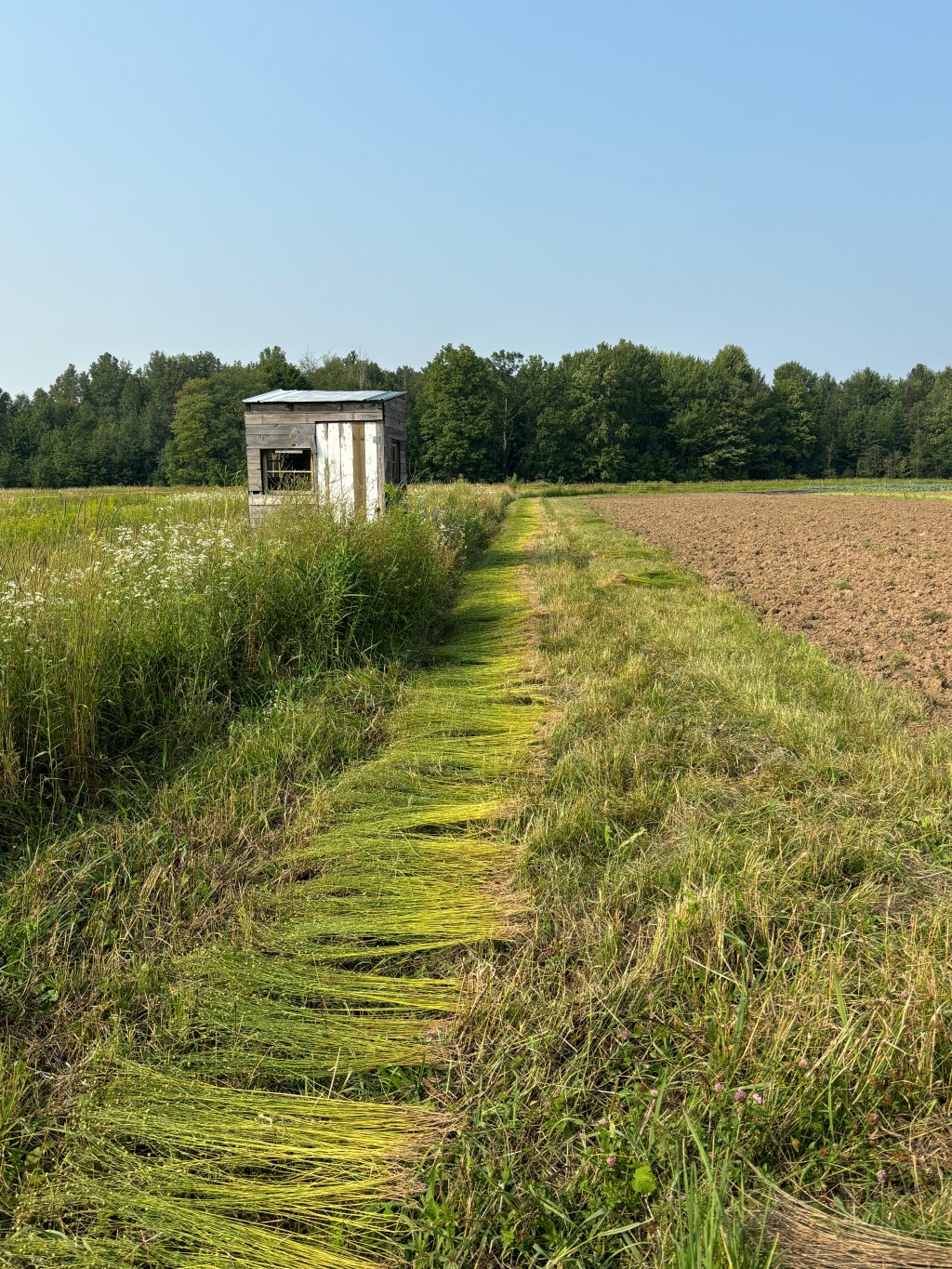
In the first stages of the process, I don’t think I differ much from others who grow flax. Spring is bed prep, planting and weeding. Summer is hoping storms don’t permanently lodge your stand, watching the bees buzz from tiny blossom to tiny blossom and harvesting. I dew ret my flax because Wisconsin is blessed with remarkably excellent dew retting conditions. Heavy, daily morning dews. Since starting at the farm, I think I can count on one hand the mornings I’ve walked out to start my day, only to find the grass dry. As a result, I ret my flax in the Summer too. And that means that by the end of Summer, my flax is stored away safe and dry and ready for processing at a later time.
And this may be where I differ from other growers and processors. I don’t think about or touch my flax again until Winter. Or I suppose I should be more specific and say late Fall (November if you want to know the month). Fall is a busy time at the farm. There’s thousands of pounds of root crops to get out of the ground, washed and stored away before the snow flies; and if you are familiar at all with the North you know that it could start any day between September and December. The farm needs to be buttoned up and ready for receiving heavy snow loads. Its a fast paced time of year and it makes you feel like you are racing Mother Nature’s whims. Some years more than most.
I also raise meat chickens starting at the end of Summer and finishing in early Fall. I love doing it but as with the raising and care of any livestock, the more attention and care they receive, the healthier they tend to be, and the better resolution you get as a producer looking to turn a profit. I have found, that I like the results of my projects better if I am able to give just one project 100% of my after work attention and energy, rather than spreading myself too thin.
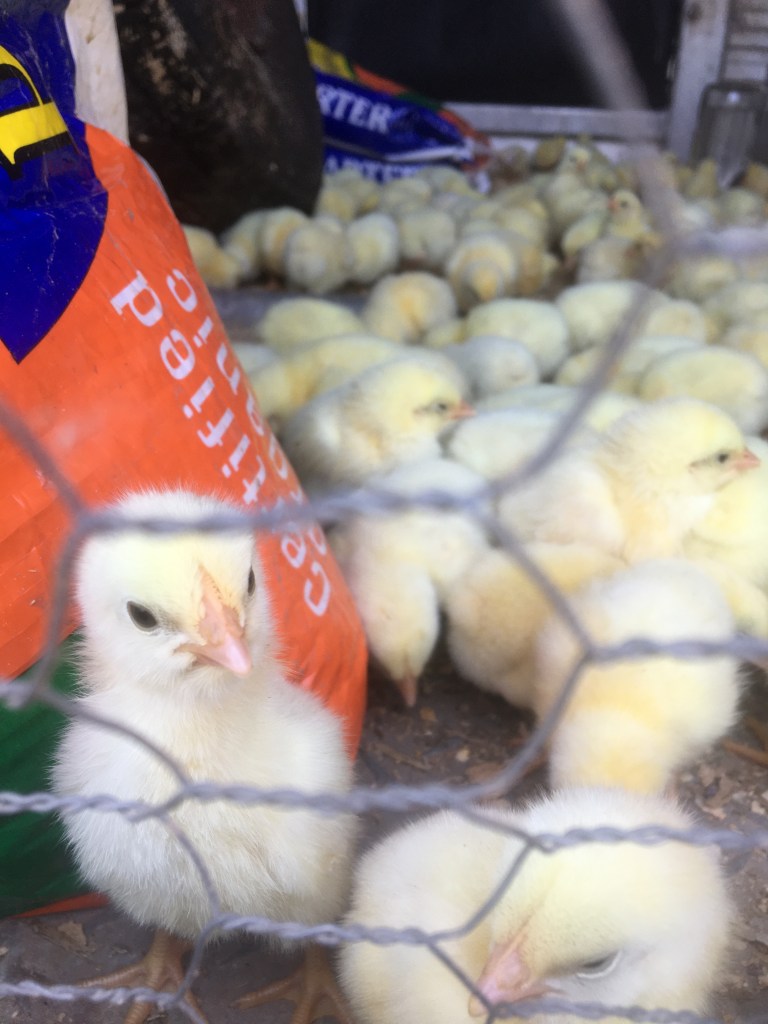
So now, after that long winded explanation, you understand why I choose to leave my flax processing until November. By November, the farm pace has slowed to a cool-down walk; my chickens have long been in their customers’ freezers, and I am ready to turn to planning how I will spend my Winter months. And this Winter, a good portion of that time will be spent hand processing the 2000 square feet of flax I harvested this Summer.
Currently, I am working on rippling, and admittedly, I haven’t gotten too far. The best way to get the large amount of work done in one season (even if that season is as long as a Wisconsin Winter) is to treat the activity like a job. You go every day for a certain amount of hours not matter what. I mean, I’m not as strict as all that but at the beginning of the week, I make a schedule that works with all the other things I have planned that week and I do my best to stick to it.
Last year, I had half as much quantity and didn’t start processing until about mid-January. In addition, I rippled all my flax before I retted last year. This year, since I doubled my quantity and have to ripple all my seeds along with it, I want to make sure I’m starting the project in a much more serious way earlier in the season.
I have several indoor spaces to choose from to process flax in the Winter, which is the main reason why this system works well for me. While these spaces are not heated, they keep the wind off which is key, they are covered and dry, and have the ability to warm up if its a sunny day thanks to that handy Greenhouse Effect. Last year, I used our new greenhouse the process flax in. It’s a large, empty space in the Winter and while it has the potential to be heated, we don’t turn the heat on until we start our Spring sowing of seeds. Unfortunately, this year I plan on using our old greenhouse. In contrast, it’s a tiny space and hasn’t been used since we built our new greenhouse. I would prefer to use the new greenhouse but learned last year that processing flax is an extremely dusty process. And that dust gets everywhere, including a thin coating over the plastic that serves as a ceiling and roof; the plastic that lets the sun in and helps plants grow. The point is to let in as much light as possible and a coating of dust, while it may not seem like that big a deal, has the potential to filter out much needed sunlight when trying to get tender starts to grow in the weak March light. So I’ve set myself up in our old greenhouse, because we aren’t growing anything in there so it doesn’t matter if the plastic is covered in dust. It will be draftier and colder, and I will have a lot less space to move around in but hey! It’ll be the motivation I need to get through the process faster.

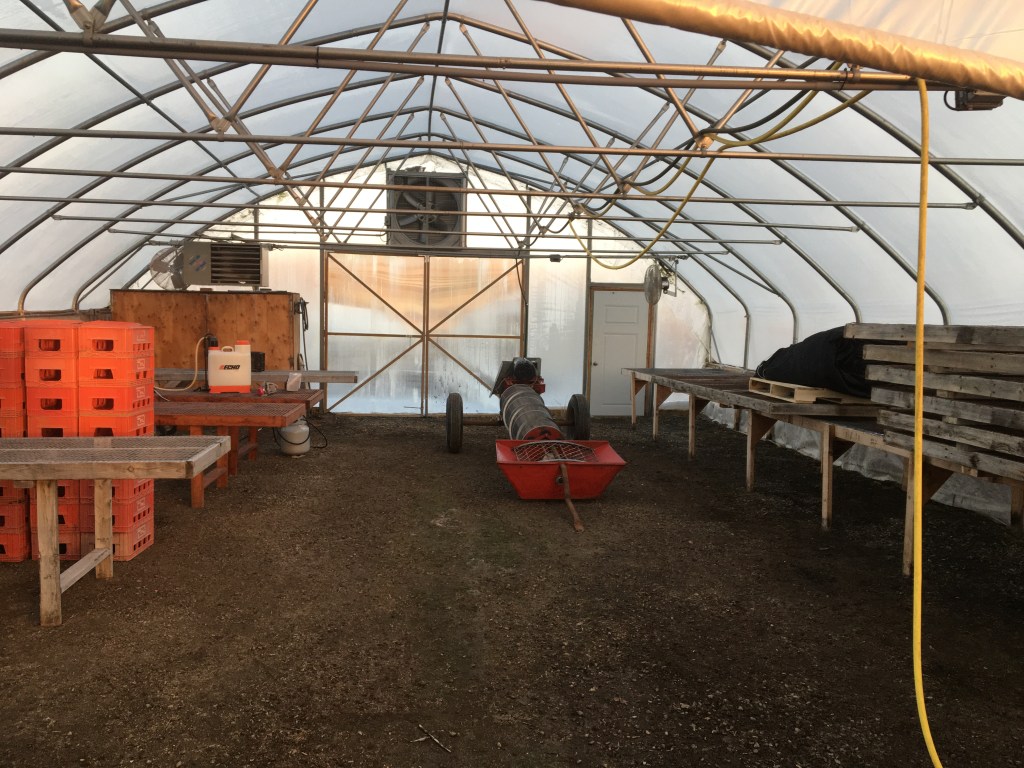
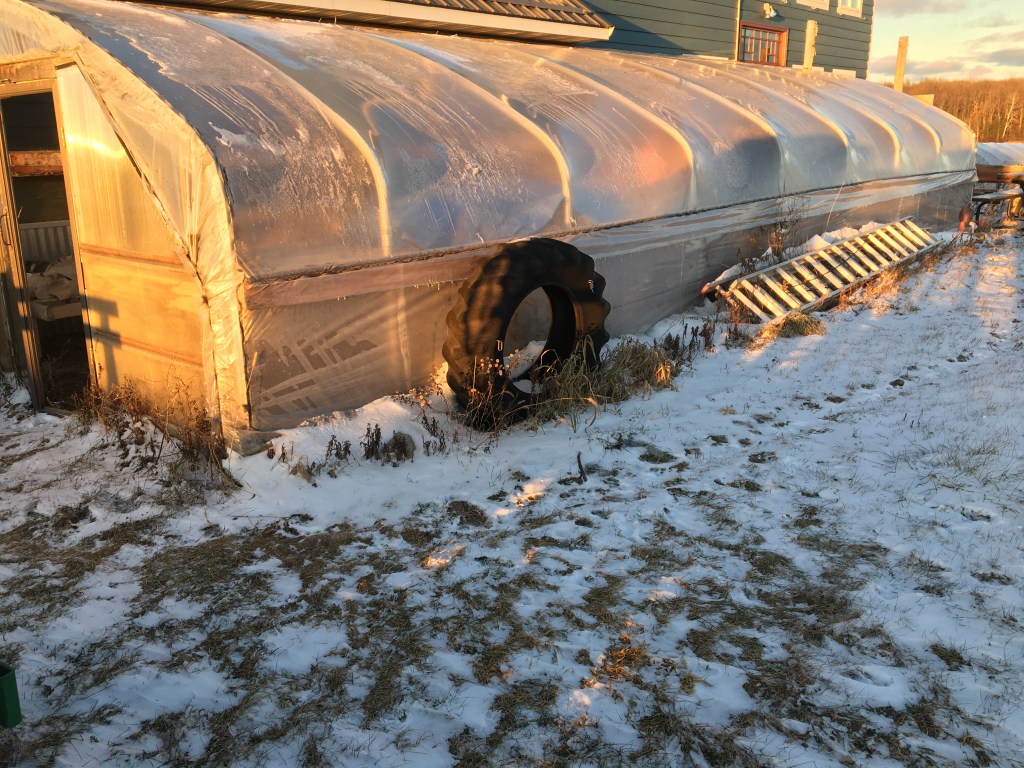
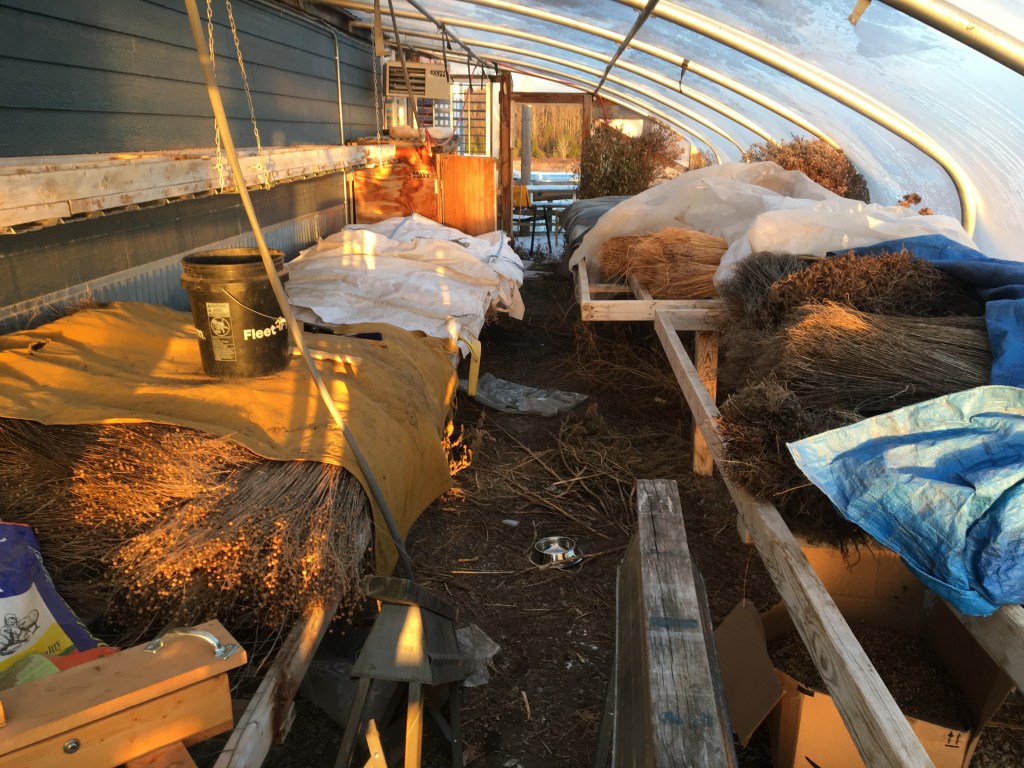
Top left: new greenhouse. Top right: new greenhouse interior. Bottom left: old greenhouse. Bottom right: old greenhouse interior; it may look like a mess but there’s flax under those tarps! The roof can be a bit leaky so I hedged my bets when I stored my retted, dried flax for winter.
And that’s about all there is to say about my winter flax work. I think spreading your workload out is a smart way to manage your energy. The Winter is the best time to do this physically intense job for me because my Spring, Summer and Fall are already full of work that drains my energy. I do have some tips for indoor flax processing that I learned from last season that I thought I would share in case you are also planning on processing your flax inside a building:
- Make sure you are working somewhere that you don’t mind getting dusty. It will fill the space and settle everywhere so cover anything that you don’t want covered in a fine layer of flax dust
- Be sure to wear a mask! Like a respirator not a surgical mask. Seriously, the dust is fine and will give you a nasty cough. I learned that first hand.
- Start your processing days slow to build up muscle strength. Your arms will be exhausted after just an hour of processing in the beginning. Ease into it!
- Set a schedule and have a due date. If you know when you need to have the project completed, the project won’t have a chance to drag on for months.
- Having quality made lightweight tools is essential. One extra pound may not sound like much but it’s a lot of extra weight after you’ve been at it for four hours.
- These are good podcast and audiobook hours. Make the most of it!
I do have one final note to add about planning for the 2025 flax crop: I have two beds saved for flax next year. They are beds coming out of our squash block and have basically been stale seed bedded because we use black plastic raised beds and have landscape fabric aisles. In other words, the beds have been tarped, meaning that the majority of the weed seeds will have germinated and died when I go to plant my flax seed in the Spring. This will make weeding a breeze as most of the competition has been taken out of the equations. Stay tuned for a comparison of my two flax beds this season that demonstrated this process!



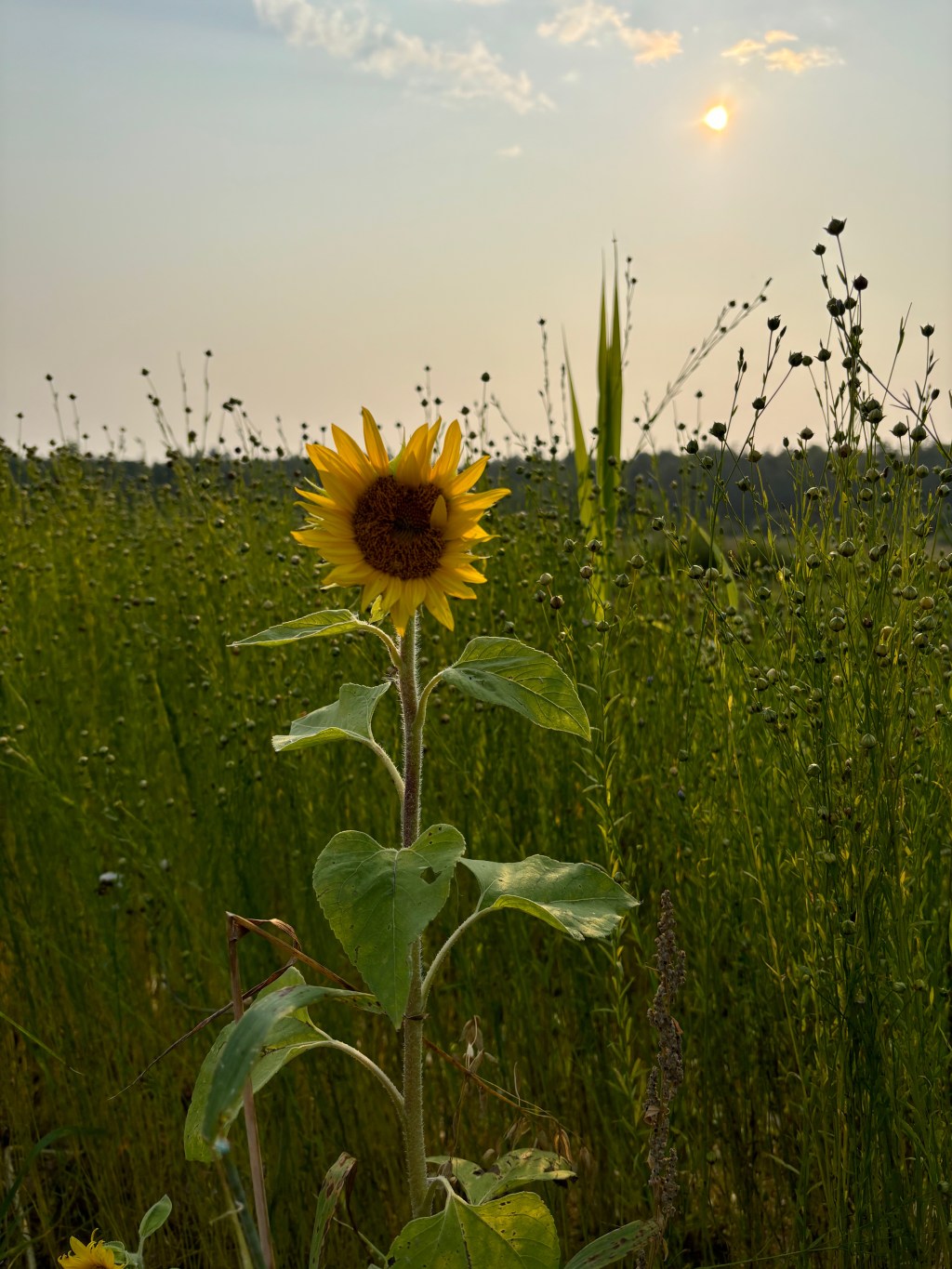

 Foxtail and Flax
Leave a comment